A new look at a chronic complication of cancer treatment
When Siobhan Huggins takes the stage at the 11th Annual San Diego Symposium for Metabolic Health, Aug. 13-16, her presentation will focus on a question that has received far too little attention: Could improving metabolic health help prevent cancer treatment-related lymphedema?
Huggins, an independent researcher known for her work on lipedema, lymphedema, metabolic health and ketogenic diets, will present on a recently published paper she co-authored titled “Metabolic Health: The key to preventing cancer treatment-related lymphedema?”
The presentation will explore the role of metabolic health, insulin resistance, inflammation, tissue health and ketogenic dietary strategies in a condition that can leave cancer survivors with lifelong swelling, pain, fibrosis, disfigurement and daily management challenges.
“I’m really excited about it,” Huggins said. “There’s a potential role for metabolic health and metabolic therapies, and the one that we decided to focus on a lot was low-carb and ketogenic diets as a metabolic approach.”
The paper does not claim that ketogenic diets can guarantee prevention. Huggins is careful about that distinction. Instead, she said the goal is to identify a promising, understudied area that deserves more attention from researchers and clinicians.
“What we’re saying is we think this would be really great to study,” Huggins said.
What is cancer treatment-related lymphedema?
Lymphedema is a disorder of the lymphatic system that can cause persistent swelling, tissue changes and increased vulnerability in the affected area. Some people are born with lymphatic abnormalities, but lymphedema can also develop after surgery, radiation or certain cancer treatments.
Cancer treatment-related lymphedema is especially common after procedures that remove or damage lymph nodes. In breast cancer, for example, lymphedema may develop in the arm on the side where lymph nodes were removed or compromised.
“Cancer treatment-related lymphedema is no small issue,” Huggins said. “From the monetary cost of things, we’re talking about something that currently doesn’t have a cure.”
The day-to-day burden can be significant. Patients may need compression garments, specialized skin care, exercise, pool access, lymphatic therapy and ongoing management to reduce symptoms and protect vulnerable tissue.
Huggins said the condition can also be disfiguring and psychologically difficult.
“Cancer treatment-related lymphedema is a big deal,” she said. “It’s disfiguring, it’s time consuming to manage, and it has a big psychological impact as well.”
One of the reasons prevention matters so much is that lymphedema can sometimes develop long after cancer treatment. Swelling may begin subtly and appear months or even years later.
“With lymphedema, if it’s being induced by some sort of treatment, it doesn’t always happen immediately,” Huggins said. “It could be two years down the road where this starts to happen.”
Why metabolic health belongs in the conversation
Huggins said the new paper grew out of a gap she and her co-authors saw in the literature. Researchers and clinicians are exploring surgical and pharmacological approaches to lymphedema prevention, but metabolic health has received less attention.
“There are new surgical treatments coming through,” she said. “There’s new medical pharmacological approaches being considered, but there was one that we hadn’t seen talked about as much, which is the potential role for metabolic health and metabolic therapies.”
That question became especially interesting because ketogenic diets are already being studied in related areas, including cancer management, organ health, hypoxic conditions and lymphatic disorders.
“There’s actually a lot of good preliminary research on ketogenic diets, in terms of organ health, and their use in organ failure and hypoxic conditions, and all of these sorts of different things that come into lymphedema development,” Huggins said.
The paper explores whether poor metabolic health, insulin resistance and inflammation may contribute to lymphedema risk, and whether improving metabolic function could help make the tissue and lymphatic system more resilient after cancer treatment.
“The general idea behind it is that a lot of the mechanisms that go into lymphedema developing have somewhat of a metabolic role to them,” Huggins said.
For people who have been told there is little they can do once lymphedema develops, even the possibility of prevention represents an important shift.
“I personally don’t want people to have to wait until lymphedema is already fully manifested to take agency over their health and try to help prevent it in the first place,” Huggins said. “I think we can do more than that.”
Hope without overpromising
Huggins has been researching lipedema since 2021, when she was introduced to Lipedema Simplified after others suggested she look into the condition. She was later diagnosed with lipedema herself and began reading through the published research before she had even received a formal diagnosis.
She soon came across work by Leslyn Keith and Catherine Seo discussing ketogenic diets as a potential management option for lipedema. Huggins had already been following a ketogenic diet since 2016, making the connection especially relevant.
Her work on lipedema naturally led her into lymphedema research because the two conditions overlap. Lipedema is a fat disorder that can involve fluid and swelling, while lymphedema is a lymphatic disorder that can involve fat accumulation and fibrosis.
“They’re like cousin conditions in a way,” Huggins said.
Her presentations on lipedema in the low-carb community have prompted strong responses from patients and clinicians. Some clinicians have approached her afterward and said they realized they may have patients — or even family members — who should be evaluated.
That response reflects how often lipedema remains underrecognized, even in clinical settings. In a previous LowCarbUSA article on Huggins’ work, she warned clinicians and coaches that they may already be seeing patients with lipedema without realizing it. Some research suggests lipedema may affect as many as one in nine adult women, which underscores why recognition, education and better treatment frameworks matter so much.
But both lipedema and lymphedema can carry a sense of discouragement for patients.
“With lipedema and lymphedema, there can be this sense of a lack of agency and sometimes a level of hopelessness that can develop,” Huggins said.
That frustration is part of what drives her work.
“I have it in my Twitter bio: Impossible just means it hasn’t been done yet,” Huggins said. “I think that’s true with both lipedema and lymphedema.”
At the same time, she is clear that hope must be grounded in evidence.
Her San Diego presentation will not tell patients that a ketogenic diet guarantees protection from lymphedema.
It will make the case that the science is strong enough to justify serious study.
“There’s so much hope that we could really help in a vulnerable period after cancer treatments, and give people hopefully a much better shot of recovering in a really healthy way,” Huggins said.
Why this matters for patients and clinicians
One of the paper’s strengths is that it was written to be accessible to researchers, clinicians and patients.
“We intentionally wrote it in a way that, whether you’re a researcher or a clinician or a patient, it should be easy to read,” Huggins said.
That matters because the people most affected by these conditions are often searching for answers on their own. Many patients with lipedema or lymphedema become deeply familiar with the research because they have had to advocate for themselves.
Huggins said people deserve access to information that may help them make informed decisions, especially when they are already looking for ways to improve their health after a cancer diagnosis or treatment.
“One of the pushbacks that we’ve seen is, you know, we don’t want to give people with cancer a diet to follow, because they’re already going through enough,” Huggins said. “And my trust is like, isn’t that their decision?”
She said some patients may decide that dietary change is not for them during cancer treatment, and that is valid. But others may want to know what options exist.
“A lot of people who are diagnosed are already looking for ways to live the rest of their life, to improve their chances at living a long and healthy life,” she said.
That is where science-based education becomes essential.
Patients need information that is realistic, careful and understandable.
Clinicians need tools to discuss those options responsibly.
The value of The SMHP
Huggins also highlighted the role of The Society of Metabolic Health Practitioners, particularly its Journal Club and Research Academy.
She said she and colleagues have recently reached out to The SMHP for help with research questions they were trying to answer and publish.
“We are largely citizen researchers,” Huggins said. “We do collaborate with other researchers, but there’s some questions that we’re looking to publish, and we’re not quite clear on one thing, and we need somebody to ask.”
The SMHP, she said, has been helpful in guiding that process.
“I think a huge benefit is the resources you get access through The SMHP, whether you’re doing citizen research, or if you’re a clinician doing research,” Huggins said.
For a field that is still developing, mentorship and infrastructure matter.
The SMHP can help researchers and clinicians ask better questions, refine projects and move forward with more confidence.
“Having access to that, being able to ask them questions, and feeling confident as you move forward, and that you’re crossing all your t’s and dotting all your i’s and doing things properly and being mentored basically on how to build the next generation of researchers and clinicians moving forward, I think that is really important and super helpful for me personally,” Huggins said.
That mission aligns closely with the purpose of the Symposium for Metabolic Health: bring together clinicians, researchers, health coaches and motivated patients who want to move metabolic health from promising ideas to practical care.
Why the Symposium matters
For Huggins, LowCarbUSA and SMHP events are valuable on multiple levels.
As a researcher, she said the events give her access to “wicked smart people” who are excited to discuss the same questions she is exploring.
They also create opportunities for collaboration and new research ideas.
“LowCarbUSA and SMHP events are great ways to do that,” Huggins said. “People are swapping emails and phone numbers and stuff all the time.”
The events also connect researchers with clinicians and metabolic health practitioners who may be able to apply emerging ideas in practice, with appropriate caution.
“There are a lot of doctors who are interested in doing that with the responsible caveats in place,” Huggins said.
But the value is not only professional. Huggins said she also comes to these events as someone who has been using a ketogenic diet to manage chronic health conditions.
“Every single time I go to a LowCarbUSA event, or anything similar, I always come out of it like, oh yeah, this is why I come to these,” she said. “I come out so motivated and with so many new ideas to try on myself.”
That connection to the community is part of what keeps her coming back.
“It reminds me why I do this,” Huggins said. “I have conversations with real people who are putting into practice the stuff that we are talking about.”
She described that experience as emotional, motivating and deeply practical.
“That’s why I keep coming back, because I need the motivation,” she said. “I know it helps motivate other people. It’s awesome for social connection, and just curating resources and questions, and basically everything you could need to keep going.”
Additional resources for lipedema and lymphedema
Huggins also pointed to several resources for clinicians, patients and others who want to learn more about lipedema, lymphedema and the potential role of metabolic therapies.
She noted that Lipedema Simplified recently collaborated with Nutrition Network to launch a new lipedema training course, Lipedema: Principles and Practice of Diagnosis and Treatment. The course is aimed primarily at physicians, but Huggins said it may also be useful for health coaches, lymphatic therapists, patients and others who want to better understand the condition.
“It’ll lead them through the holistic approach, so recognizing people with lipedema as whole people,” Huggins said.
The course was built around the textbook “Lipedema: Principles and Practice of Diagnosis and Treatment,” which Huggins described as a comprehensive resource covering diagnosis, symptoms, nutritional therapies, conservative treatments, surgical approaches and future research opportunities.
For people already diagnosed with lymphedema and looking for an accessible starting point, Huggins recommended Leslyn Keith’s book “The Lymphatic Code,” which discusses ketogenic and low-carb diets, insulin, insulin resistance and lymphatic disorders.
“That is written for lay people, so it’s going to be very approachable,” Huggins said. “She talks about the anatomy of the lymphatics, how nutritional therapies can impact, and all of that.”
A presentation rooted in science and possibility
Huggins’ San Diego presentation should be especially relevant for people interested in lipedema, lymphedema, cancer survivorship, metabolic therapies, therapeutic carbohydrate reduction, ketogenic diets and the practical ways metabolic health may affect recovery and long-term quality of life.
It is also likely to resonate with clinicians who want to recognize these conditions earlier and discuss metabolic strategies more confidently with patients.
The larger message of Huggins’ work is that people facing lipedema, lymphedema or cancer treatment-related lymphedema should not be left with hopelessness. There may be more to learn, and more to study, but there is already enough science to ask better questions.
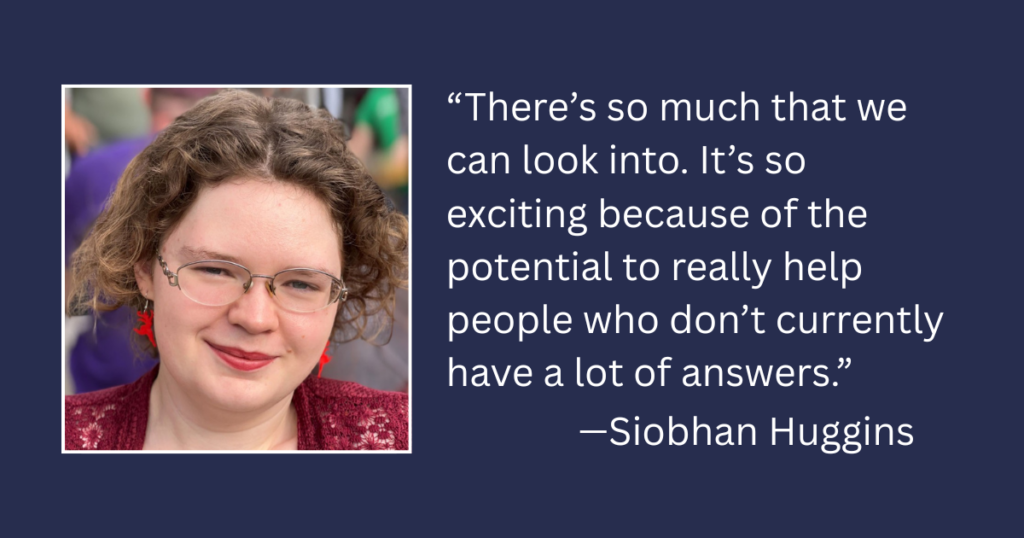
“There’s so much that we can look into,” Huggins said. “It’s so exciting because of the potential to really help people who don’t currently have a lot of answers.”
That is the promise of her upcoming presentation in San Diego: not certainty, not overstatement, but a serious, science-based case for exploring metabolic health as part of a better future for people at risk of lymphedema.
And for a community built around metabolic health, that is exactly the kind of conversation worth having.
What to Expect at the 2026 San Diego Symposium
Huggins’ presentation is one part of a broader event designed to explore the many ways metabolic health influences chronic disease, clinical care and quality of life.
The 2026 Symposium for Metabolic Health will take place Aug. 13-16 at the Wyndham San Diego Bayside Hotel. Hosted by LowCarbUSA in collaboration with The Society of Metabolic Health Practitioners, the event will bring together physicians, researchers, health coaches, dietitians, fitness professionals and members of the public interested in evidence-based approaches to improving metabolic health.
This year’s Symposium will include a special focus day dedicated to The Metabolic Roots of Obesity and Type 2 Diabetes, along with presentations on therapeutic carbohydrate reduction, cardiovascular disease, nutrition, exercise, neurological health, mental health and other lifestyle-based strategies aimed at addressing the root causes of chronic disease.
For clinicians and health professionals, the conference offers continuing education opportunities and direct access to many leading voices in metabolic health. For patients and members of the public, it offers a rare opportunity to learn directly from experts while connecting with a community of people actively seeking better answers.
Learn more or register for the 2026 San Diego Symposium for Metabolic Health.