Introduction
Congratulations, we are so excited to see your interest in adopting a Low Carb High Fat (LCHF) lifestyle, one of the most effective ways to improve metabolic health and support sustainable weight loss. First, a quick introduction, I’m Doug and I started LowCarbUSA® because low carb changed my own health, and I wanted to help others find that too.
First of all, I would like to address the common concerns about eating low carb and dispel a few myths in the process. Let’s start out by defining what we are referring to when we talk about a low carb diet. There are a number of versions of low carb diets, like the Atkins Diet, the Primal Diet, the Paleo Diet, and many others. They all differ in some way, some greater than others. Our main focus is on what would most accurately be described as a ketogenic diet or Banting, which is named after an Englishman who famously made this diet very popular in England in the 1800s and has become a phenomenon in South Africa. Following this lifestyle activates the metabolic changes that result in the prevention of, as well as control, and even total reversal of, many metabolic conditions such as type 2 diabetes. It also results in the mobilization of your body’s fat reserves, allowing for much more effective and sustainable weight loss. In the end, whatever your choice of low carb lifestyle, we are here to support you.
 The first and most important step on a low carb diet is to eliminate sugar and all processed food entirely. More than 85% of all the thousands of new products entering our marketplace each year contain some form of sugar. Sugar and processed carbohydrates are poison and they have to go, no matter what diet you choose! If you listened to any of the amazing videos by Dr. Robert Cywes, you would have come to understand that sugar addiction is very real and very powerful. His videos provide some incredible help in dealing with this if you are one of the many who genuinely suffer from this addiction.
A common question is whether LCHF is sustainable long term, and we’ve found the answer is a clear yes. Eating delicious meats, fish, cheese, and fresh vegetables makes this way of eating less of a diet and more of a lifestyle. You won’t be feeling weak with hunger as you do with the traditional low fat, calorie restricting diet. Once you ditch the carbs and processed food, you will find that you don’t miss them at all. In fact, your taste buds will become very sensitive, and if you try something you once enjoyed you will think it is too sweet and wonder why you liked it in the first place. Once adapted, you will feel energetic and healthy and not want to go back to being dependent on sugar for fuel. And if you previously experienced blood sugar issues, you will find that they clear up almost immediately. You won’t have those terrible ups and downs ever again.
Once you ditch the carbs and start cooking real food, and see all the amazing low carb recipes and all the foods you can eat that you weren’t “allowed” to eat before, it’s easy! Pam and I find that we start salivating and look forward to the next awesome meal so much that we never even think about the bland pasta or rice or potatoes that are no longer on the menu. In fact, once you start to become adapted, you feel so much more energetic and healthy, and you feel so terrible if you do slip and eat a bunch of carbs, that you don’t want to touch them again. That all being said, I have had to learn since writing this that sugar addiction is much more of a real issue than I first thought, so I point those who still struggle to the help offered in the video series on our site by Dr. Robert Cywes.
A common misconception is that keto is a high protein diet. It’s actually a moderate protein diet, with adequate protein coming from fish, chicken, red meat, full cream dairy products, and eggs. We advocate an animal product based diet, as the real evidence out there now is overwhelming that, nutritionally, it is the best option. However, we recognize that many people have religious and/or ethical reasons for wanting to be vegan or vegetarian. If that is the case, but you still recognize that restricting carbs is better for your metabolic health, then we want to support you in that effort. It is much harder and requires a lot of supplementation, but it is doable. Here is a great resource for those who choose this route.
Protein should make up 20 to 25% of your daily diet. Carbohydrates will make up less than 10% of your daily diet and will come from leafy green vegetables including lettuce, spinach, and kale. Broccoli, cauliflower, Brussels sprouts, and many other veggies are also part of this plan. The remainder of your daily diet will be comprised of saturated fats like butter and coconut oil, monounsaturated fats, and fats containing omega 3s like olive oil, avocados, and macadamia nuts. Vegetable and seed oils are to be avoided at all costs.
The other main argument we hear is that all this fat will clog our arteries with cholesterol and give us heart disease. All the latest research on this says, absolutely not. Just watch the two videos about the Cholesterol Myth if you are not convinced. In fact, the latest research suggests that it is the inflammation caused by carbohydrates and vegetable and seed oils that is really at the root of arterial damage and heart disease.
The evidence is clear: a low carb lifestyle improves our health in almost every way. It results in weight loss, it reduces hunger, it has been shown to effectively treat type 2 diabetes and even reverse it in some cases, it improves the metabolic syndrome and blood lipid profiles, and the list goes on and on.
option. However, we recognise that many people have religious and/or ethical reasons for wanting to be vegan or vegetarian. If that is the case, but you still recognise that restricting carbs is better for your metabolic health, then we want to support you in that effort. It is much harder and requires a lot of supplementation but it is doable. Here is a great resource for those who choose this route.
Protein should make up 20-25% of your daily diet. Carbohydrates will make up less than 10% of your daily diet and will come from leafy green vegetables including lettuce, spinach, and kale. Broccoli, cauliflower and Brussels sprouts and many other veggies are also part of this plan. The remainder of your daily diet will be comprised of saturated fats like butter and coconut oil, monounsaturated fats and fats containing omega 3s like olive oil, avocados and macadamia nuts. Vegetable and seed oils are to be avoided at all costs.
The other main argument we hear is that all this fat will clog our arteries with cholesterol and give us heart disease. All the latest research on this says, ‘absolutely not’. Just watch the 2 videos about the Cholesterol Myth if you are not convinced. In fact, the latest research suggests that it is the inflammation caused by carbohydrates and vegetable and seed oils that is really at the root of arterial damage and heart disease.
The truth is that a Low Carb Lifestyle improves our health in almost every way – it results in weight loss, it reduces hunger, it has been shown to effectively treat Type 2 Diabetes and even reverse it in some cases, it improves the metabolic syndrome, blood lipid profiles, the list goes on and on.
Preparation
 It is important to note that the guidance we are providing here is based on our extensive research and personal experience. It is not intended as medical advice in any way. If you are a diabetic on insulin or other medication, an LCHF diet will absolutely affect these, and you must have a doctor supervise you, as you will likely need to be weaned off your medication as you regain your health. Finding a doctor who understands the principles of LCHF and will support you in your journey is becoming easier as more scientific studies validate this way of eating. That said, if your doctor is not open to the concept of low carb diets, they will never support you on this, or advise you correctly, no matter what. If you find yourself in that situation, we recommend finding a low carb friendly doctor without delay. For more on the scope of this guidance, see our full disclaimer.
Adopting a low carb or ketogenic lifestyle is a big decision, and it takes real courage to start, since you’re going against decades of conventional dietary advice, though that is changing fast. You’ll need to overcome nearly 40 years of fear around dietary fat, and you may encounter resistance from friends, doctors, and even family along the way.
That conviction comes from two places. First, the science: there is more and more irrefutable evidence that this lifestyle is right for most people, and watching a few beginner-focused videos this week is the fastest way to understand why. Second, the anecdotal evidence: real stories of recovery from morbid obesity, type 2 diabetes, and other metabolic diseases, many of them featured in those same videos. At the end of the day, this is your own personal journey, and you have to find what inspires and works for you. Check our “YouTube Playlist for Beginners” to learn more about starting your journey.
How to Track Your Carbs, Protein, and Fat on Keto
 For a lot of people, the only way to adopt a Ketogenic Lifestyle successfully (in our experience) is to track the macronutrient profile (carbohydrates, protein and fat) of everything that passes your lips. That is the only way you can make sure your consumption of carbohydrates is low enough and that your diet is properly formulated. The first step is to get a food tracker and learn how to use it. I have tried 6 different trackers since I started this journey and they all have their pros and cons, but the one I have found most useful and easiest to use is, by far, the one from Cronometer. They have some really good videos to teach you how to use it and their support staff is excellent. You can use whatever you like (you can even write it down on a piece of paper, if you like) but you must start tracking this week.
If you are anything like me, you will be horrified when you realize what you are eating. Once you have Cronometer set up you will find that they have a really good database of foods already available, but you are bound to come across some that are not in the database, so you have to create a custom food type and for that you need to learn how to read the nutrition labels on the packages. First thing is the % Daily Value column down the right hand side. It assumes that every person in the world needs the same amount of each nutrient each day and furthermore it is based on the current government dietary guidelines which we know are, of course, garbage! So, ignore this!!
 Next is the portion size. When
you are entering or creating a Food Type in the tracker, all the numbers you enter are relative to the portion size which is right up there under the ‘Nutrition Facts’. Once you have entered that then go on and enter the values for calories, Fat (Lipids), Saturated Fat, Carbohydrates, Fibre and Protein. Don’t worry about anything else. Once you have entered the food type it is done and you can use it over and over from there on out. You can also create recipes for dishes you make a lot and then you only have to enter all the different ingredients once.
You should also start adding some bio-metrics. Weight is the most obvious one but you should take some measurements as well: waist, hips, thigh, upper arm and any others you choose. Men might only need the waist measurement but it is often useful for ladies to track a few others. I track my weight every day and measure my waist about once a month.
If you get freaked out by the daily variances in your weight due to water retention and other metabolic changes that are occurring constantly in your body during this journey, then weigh yourself once a week, or even once a month. Just do it at the same time every day, preferably in the morning after you have been to the toilet. That will give you the most consistent comparison. Do your first set of measurements the morning you start for real. The beginning of Week 1.
How Do You Measure Ketones?
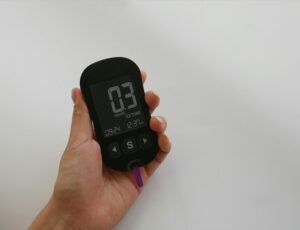 Next week you will learn a whole lot more about ketosis. As you reduce carbs and your body starts burning fat for fuel, it produces ketone bodies, which are used as an alternative energy source to glucose. You are considered to be “in ketosis” when the concentration of ketone bodies in your bloodstream falls between 0.5 and 5 mM/L, and measuring that concentration is the only reliable way to know for sure.
Three types of ketone bodies are produced: beta-hydroxybutyrate, which is measured in the blood, acetoacetate, which is excreted in the urine, and acetone, which is excreted through the lungs. Ketone test strips are the cheapest and easiest option, but also the least accurate. During adaptation, kidney function changes, and for some people that means less acetoacetate is excreted, producing a negative reading even though they’re genuinely in ketosis. The problem is you don’t know if you’re one of those people.
Testing beta-hydroxybutyrate directly is the most accurate method, but also the most expensive and invasive. You have to prick your finger for every reading, and while the meter itself is inexpensive, the test strips and lancets add up over time. That market used to be dominated by one company, but Keto-Mojo launched a new product at our San Diego event in 2017 with test strips priced at roughly a third of the competitor’s cost, making it worth considering if accuracy matters most to you.
Breathalyzer-style devices have also become available, measuring acetone concentration in your breath. Most connect to an app and store your readings for later analysis, and since they don’t require test strips, they’re a good option if you’d rather not prick your finger multiple times a day. So far, none we’ve tested have been consistently accurate, but they’re still worth considering if finger pricks are a dealbreaker for you.
Exogenous Ketones
 Something you will learn about next week is the “keto flu.” When you drastically reduce your carb intake, your body burns through its glycogen stores in the muscles and liver, and once those are fully depleted, usually after about five days, your body has to shift to burning fat and producing ketones instead. Since this isn’t something your body is used to doing, there’s an adaptation period, and during that stretch you may notice low energy and even mild lightheadedness for anywhere from 7 to 14 days.
The lightheadedness is easy to fix by increasing salt intake, but the fatigue is often the real reason people give up on a ketogenic diet before adapting. This is where exogenous ketones come in. A lot of misinformation surrounds these products, including the false claim that you can stay in ketosis just by consuming them regardless of diet. That’s not true, but they do have a legitimate place: they give your body an external source of ketones to burn while it’s still adapting, and some people find them a useful way to start the day in place of coffee.
Research is still ongoing, but thousands of anecdotal reports point to real effectiveness, and there’s growing research into their use in cancer treatment and various neurological conditions. People who can’t strictly maintain a ketogenic diet, for whatever reason, sometimes use exogenous ketones to get some of the benefits of elevated blood ketones without being fully in ketosis. If you plan to use them, it’s worth ordering now, before the keto flu actually hits.
Maria and Craig Emmerich, who have both presented at our events, talk about the concept of oxidative priority: if weight loss is your primary goal, you may want to avoid exogenous ketones long term, since your body will burn those off for energy before it ever turns to your own fat stores.
Planning the Groceries
 The other essential gadget you need in order to get started is a good food scale. If you don’t already have one, you can get one inexpensively, so order it now to make sure it arrives before next week begins. With everything in place, you can start stocking your pantry and building your grocery list.
While we’re on the subject of scales, you’ll also need a bathroom scale to start weighing yourself, along with a tape measure for tracking your waist, thighs, and upper arms. If you don’t already have both, now’s the time to get them.
Now it’s time to visit Pam’s Pantry, where you’ll find the essential items every keto kitchen should keep on hand, both for cooking and for satisfying hunger with the right snacks. You should never go hungry on this lifestyle; if you’re hungry, you eat, but keeping keto-friendly snacks stocked ensures you’re always eating the right foods when you do.
On the Keto Essentials page, we’ve listed all of these items. You don’t need every single one, just choose what appeals to you and fits your budget, and start building your shopping list from there.
Next, take a look at the Meal Planner. Rather than a rigid daily meal plan, which rarely fits everyone’s schedule or needs, we’ve provided a list of meal suggestions you can mix, match, or ignore entirely in favor of your own ideas. Decide what works for you each day, add the groceries you’ll need to your shopping list, and get your pantry stocked before Week 1 begins.
What Should Be in Your Keto Pantry?
Meal Planner