One of the most anticipated moments of the 2026 Boca Symposium for Metabolic Health came during Friday’s dedicated cardiovascular track — a full day focused on one of the most urgent and misunderstood areas in modern medicine: heart disease.
For years, attendees have asked for deeper conversations around cardiovascular risk, plaque progression, and real-world clinical strategies grounded in metabolic health. This year, that request became reality, bringing together clinicians, researchers, coaches, and patients eager to better understand how therapeutic carbohydrate reduction and metabolic therapies are reshaping cardiovascular care.
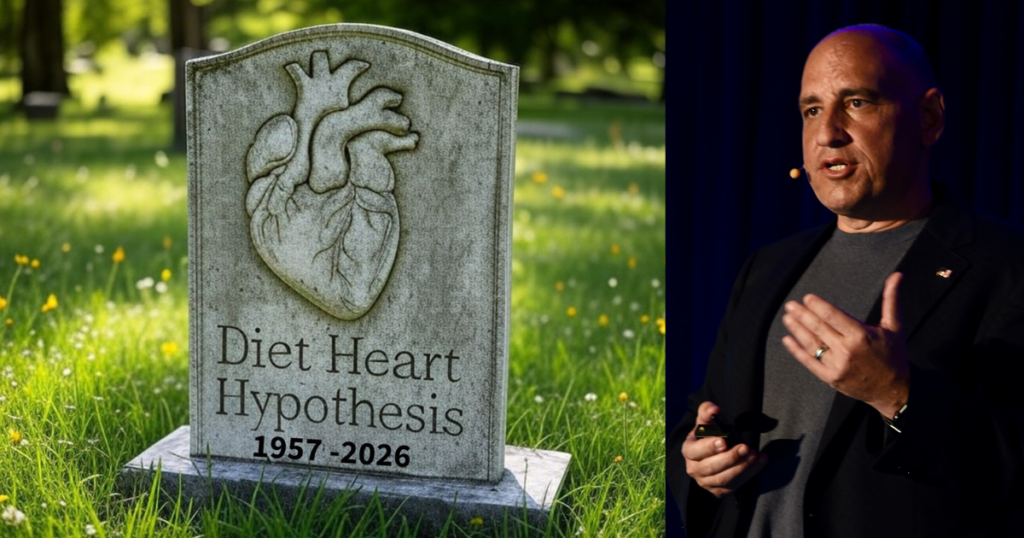
Among the presenters was heart surgeon Dr. Philip Ovadia, founder of Ovadia Heart Health, whose talk explored how cardiovascular disease is being managed inside a metabolic-health-focused medical practice — and why the paradigm around heart disease may finally be shifting.
A Changing Conversation Around Heart Disease
Opening his presentation, Dr. Ovadia reflected on his own journey from traditional cardiac surgery into metabolic health, a transition that mirrors a broader movement happening across medicine.
“I think it’s time for us to stop being so nice,” he told the audience. “I think it’s time that we really definitively come out and say that the Diet Heart hypothesis is dead and it’s buried.”
His central message was clear and consistent with the mission shared by LowCarbUSA and the Society of Metabolic Health Practitioners (The SMHP):
“Heart disease is a metabolic disease, and as such, we need to treat it with metabolic therapies.”
Rather than focusing narrowly on cholesterol numbers alone, Dr. Ovadia described how insulin resistance and chronic inflammation drive the underlying disease process that ultimately leads to atherosclerosis and cardiac events.
“This is what leads to the plaque,” he explained, emphasizing that metabolic dysfunction, not simply dietary fat intake, sits at the root of cardiovascular disease.
Meeting Patients Where They Are
One of the practical challenges clinicians now face is helping patients reconcile decades of dietary messaging with emerging evidence.
Patients, Dr. Ovadia noted, have spent “30, 40, 50 years of their lives hearing that meat is poison and eggs are going to kill you,” only to now encounter guidance that looks very different.
That confusion makes education essential. In his practice, he begins with measurable data and longitudinal tracking.
“It’s not only about the numbers,” he said. “It’s about how they’re changing.”
Regular blood work allows patients to see improvements in insulin resistance, inflammatory markers, and metabolic health over time – reinforcing lifestyle interventions such as carbohydrate reduction, nutrient-dense eating, and increased physical activity.
Looking Beyond Simplified Markers
While many people within metabolic health communities use simple proxies like the triglyceride-to-HDL ratio, Dr. Ovadia encouraged clinicians to dig deeper.
“I would not accept the triglyceride HDL ratio as a definitive measure of insulin resistance,” he said. “Go deeper and measure the actual insulin resistance.”
Advanced lipid testing, inflammation markers, and HOMA-IR and fasting insulin measurements provide a more complete understanding of risk, particularly for patients who may appear metabolically healthy by traditional screening methods.
He also addressed one of the most persistent debates in cardiology – cholesterol..
“For decades, cholesterol has been blamed for heart disease, but we know it is not the villain,” he explained. “It is not about the cholesterol quantity.”
Instead, he focuses on particle characteristics and metabolic context, noting that the proportion of small, dense LDL particles is a far stronger predictor of risk than total cholesterol levels alone.
Measure the Disease, Not Just the Risk
A key theme of the presentation was the importance of directly measuring cardiovascular disease rather than relying solely on risk factors.
“If we’re concerned about a disease, we should measure the disease,” Dr. Ovadia said.
He advocated strongly for coronary artery calcium (CAC) scanning as part of routine prevention, calling it “a non-negotiable part of everyone’s medical management.”
Beyond the well-known “power of zero” CAC score, he introduced another goal for patients already living with plaque: stopping progression.
“The power of zero progression,” he explained, means preventing plaque from worsening… an achievable clinical target when metabolic health improves.
Through case studies, he demonstrated patients stabilizing or even reducing plaque progression after addressing insulin resistance, inflammation, environmental exposures, and lifestyle factors.
Nutrient Density and the Gut–Heart Connection
Later in the talk, Dr. Ovadia shifted to a broader concept increasingly emphasized across metabolic health disciplines: nutrient density.
“The one and only reason that we eat is to get the nutrients from that food,” he said.
Rather than focusing primarily on calories or energy density, he encouraged evaluating foods based on nutrient availability and bioavailability, areas where animal-source foods often play an important role.
He also highlighted the emerging understanding of the gut–heart connection, explaining that inflammation originating in the gut can directly influence cardiovascular health. Supporting metabolic function through nutrient-dense, whole foods helps reduce inflammation and improve overall cardiovascular outcomes.
“We shift our focus from fearing cholesterol to fixing insulin resistance via a nutrient dense diet,” he summarized.
A Team-Based Model of Care
Another major theme aligned closely with the SMHP mission: metabolic health care requires collaboration.
“This is a team-based approach,” Dr. Ovadia said. “I don’t think doctors should be doing this by themselves.”
Health coaches, nutrition professionals, and trained practitioners play a critical role in helping patients implement sustainable lifestyle changes, increasing touchpoints and improving long-term adherence.
This multidisciplinary model reflects what Symposium conferences have consistently aimed to build: a shared learning environment where practitioners, coaches, and individuals work together toward better metabolic health outcomes.
A Movement Moving Into the Mainstream
Perhaps the most encouraging moment came when Dr. Ovadia described what he is now seeing among fellow physicians. Increasingly, doctors are personally adopting low-carbohydrate and ketogenic approaches, even if many remain hesitant to discuss them openly with patients.
“They know it works,” he said, “but they’re mostly fearful about talking about it, and that’s what we need to change.”
His message to practitioners was not confrontation, but collaboration:
“Don’t hate them… say, let me show you the way.”
It’s a philosophy that reflects the broader spirit of LowCarbUSA and SMHP conferences — creating spaces where curiosity replaces division and where clinical experience, emerging science, and patient outcomes can be shared openly.
Why These Conversations Matter
The dedicated cardiovascular day at the 2026 Boca Symposium demonstrated how far the metabolic health movement has come. What was once considered fringe discussion is increasingly supported by clinical outcomes, growing research, and practitioner experience.
As Dr. Ovadia concluded, the opportunity now is to bring these ideas into the mainstream conversation – not through debate alone, but through education, collaboration, and continued clinical success.
And that is precisely why the Symposium exists: to bring together practitioners, researchers, coaches, and individuals committed to improving metabolic health through evidence-based lifestyle interventions, including therapeutic carbohydrate reduction.
The conversations that began on stage continued in hallways, during meals, and long after sessions ended — a reminder that progress in medicine often starts when people gather, share results, and ask better questions together.
One of the lighter, yet memorable, moments from the cardiovascular sessions came when Dr. Ovadia came to the mic during a Q&A session and started what sounded like a joke: “a PhD neuroscientist, an engineer, a vascular surgeon, a bariatric surgeon, a cardiac surgeon, an internist, and a couple of cardiologists all walk into a proverbial bar…” His point, though, was serious. He reflected on how rare it is to see such a diverse group of experts gathered around a single goal — improving metabolic health — and thanked Doug Reynolds, Pam Devine, and the entire LowCarbUSA and The SMHP community for creating a space where meaningful collaboration can happen. You can watch the clip here.
Register for upcoming Symposium for Metabolic Health conferences.
- 11th Annual San Diego Symposium for Metabolic Health
- 2027 San Antonio Symposium for Metabolic Health
- 2028 Boca Symposium for Metabolic Health