Eleven years after being a key part of LowCarbUSA’s first San Diego event, the influential author and journalist is still pushing the conversation forward
Some speakers explain an idea.
Others help change the way people see the world.
For many in the low-carb and metabolic health community, Gary Taubes belongs firmly in the second category.
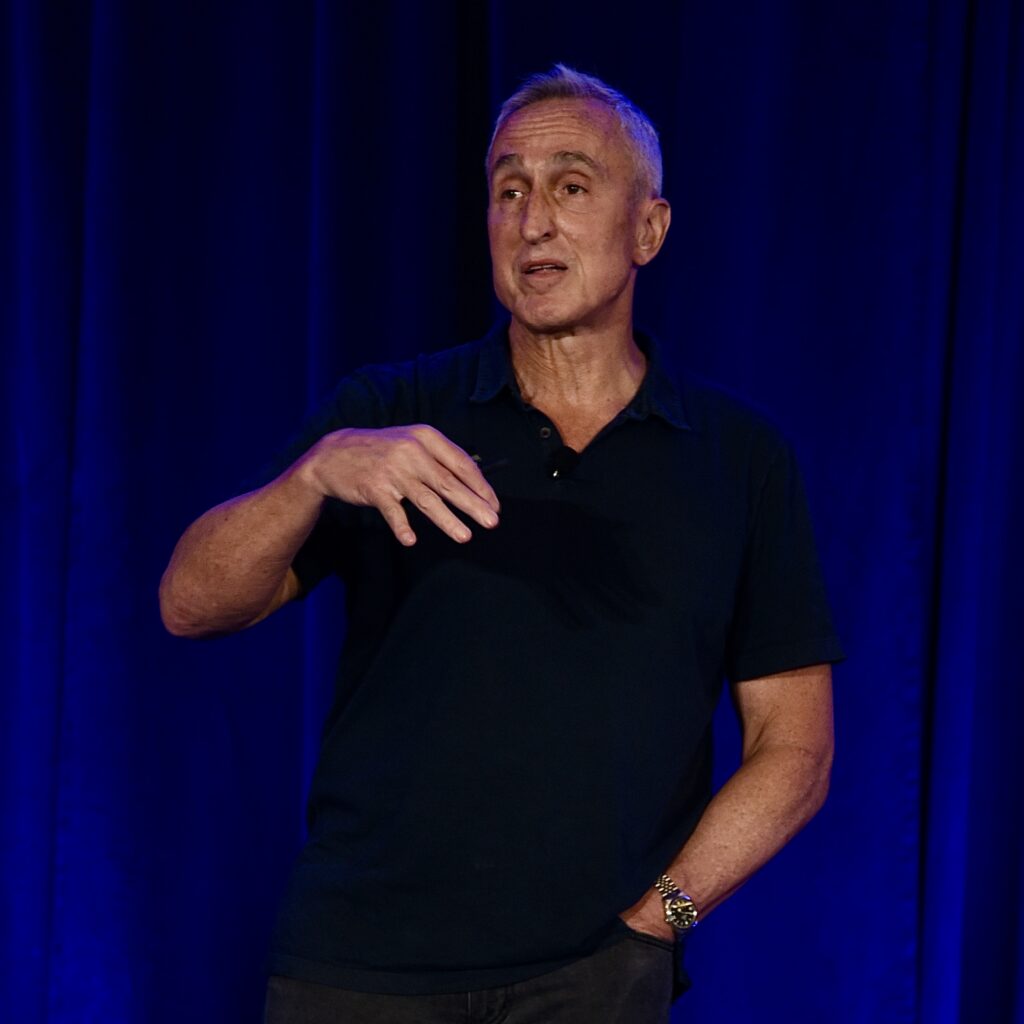
Taubes, the award-winning science journalist and author of “Good Calories, Bad Calories,” “Why We Get Fat,” “The Case Against Sugar,” “The Case for Keto” and “Rethinking Diabetes,” will return to San Diego this August as part of the 2026 Symposium for Metabolic Health, hosted by LowCarbUSA in partnership with the Society of Metabolic Health Practitioners. His appearance is more than another name on an already dynamic speaker lineup.
For many physicians, researchers, health coaches and patients, Taubes’ work was the moment the light went on — the moment obesity, diabetes, hunger, fat storage, insulin and failed dietary advice began to make sense in a new way.
That was true for me.
I can still remember where I was when I read “Why We Get Fat” and began to understand my own struggles with weight and health differently. That book helped set me on a path that eventually led to an 80-pound weight loss, a dramatic change in my health and, ultimately, a career as a health coach.
I have heard similar stories from dozens of others, including Dr. Philip Ovadia, founder of Ovadia Heart Health, and Krisna Hanks, a health coach and employee wellness director with the OHH practice.
So when I had the opportunity to speak with Taubes recently ahead of the San Diego symposium, I asked him what it is like to know that his books have helped change so many lives.
His answer was pure Taubes: thoughtful, careful, humble and unwilling to accept even praise without examining the premise.
“It depends whether or not you’re actually going to live longer because you took my advice or not,” he said.
When I suggested that quality of life matters, too — that my life over the past eight years has been dramatically better regardless of the final number of years — he acknowledged the point.
Taubes said the messages he receives from readers do matter. The best emails, he said, are from people who tell him they were 120 pounds overweight, struggling with medical problems, read one of his books, changed their diet and wanted to thank him.
Those are the emails he forwards to his wife.
They remind him that the long hours spent in his office researching, writing and challenging conventional wisdom have made a difference.
“If I had done all this and it hadn’t affected anyone’s life, I’d have stopped doing it,” he said.
A timely return to the public debate
Taubes’ appearance in San Diego comes at a particularly relevant moment.
On June 23, The Atlantic published his latest article, “A Fancy Name for Junk Food,” with the subtitle, “Does the war on ‘ultra-processed foods’ make any sense?”
It is exactly the kind of piece that has defined Taubes’ career: not a defense of junk food, but a challenge to a popular explanation that may be too vague to carry the scientific weight being placed on it.
In our conversation, Taubes said his concern with the ultra-processed food concept is that it risks defining almost anything that comes from a factory as bad and almost anything that is minimally processed as good.
That may sound reasonable at first. But for Taubes, it misses something essential.
A person can eat a diet full of fruits, vegetables and whole grains, avoid obvious junk food and still gain weight or remain metabolically unhealthy if that person does not tolerate carbohydrates well. For people with obesity, type 2 diabetes, insulin resistance or carbohydrate intolerance, the key issue may not be whether a food is processed, but what that food does in the body.
That distinction is important.
For Taubes, the problem is not that ultra-processed foods are above criticism. It is that the category may be too broad to explain what matters most: how different foods affect hunger, blood sugar, insulin, fat storage and long-term metabolic health.
If a low-carb protein bar and a candy bar are both called ultra-processed, but one has very different effects on blood sugar, insulin, hunger and weight than the other, the category may obscure more than it reveals.
That is the role Taubes has played for decades.
He does not simply ask whether a nutrition idea is popular.
He asks whether it explains what needs to be explained.
What Taubes may present in San Diego
Taubes said he is considering two possible talks for the 2026 Symposium for Metabolic Health.
The first would explore the history of how obesity came to be understood as an energy balance problem — the familiar idea that people gain weight because they eat too much and move too little.
Taubes recently gave a version of that talk at the National Institutes of Health. He said the history is fascinating, especially when traced back to German and Austrian medical science before World War II.
According to Taubes, leading researchers in Germany and Austria had already begun to reject the idea that obesity could be explained simply by overeating. They viewed it instead as a disorder of fat storage — a framework that later connects naturally to questions about insulin, hormones and metabolic regulation.
Then World War II disrupted that scientific tradition, and much of that thinking disappeared from the mainstream conversation.
Taubes said he now has access to more of the original German literature and, with the help of modern translation tools, has been able to examine that history in greater depth.
His second possible talk would focus on the case for ketogenic diets.
That presentation would draw from the ideas behind “The Case for Keto,” for which Taubes interviewed 120 physicians who use low-carbohydrate or ketogenic diets in clinical practice.
The question, he said, is why anyone would do what still seems radical to much of the public and medical establishment: abstain from carbohydrate-rich foods.
His answer is grounded not in ideology, but in clinical experience.
For a large percentage of people struggling with obesity, type 2 diabetes, insulin resistance or related metabolic disease, carbohydrate restriction may not be simply one diet among many. It may be the dietary approach that finally makes long-term success possible.
Either topic would be well worth the trip to San Diego.
One would challenge attendees to rethink the history of obesity science.
The other would challenge them to rethink why ketogenic diets may be necessary for so many people who have failed repeatedly with conventional advice.
Both would place Taubes exactly where he has been for much of his career: asking whether the story we have been told is actually supported by the evidence.
Why his work continues to resonate
I asked Taubes why he thinks his books have affected so many people so deeply.
His answer began with the way he works.
Taubes is a journalist with a science background. He wanted to be an investigative reporter, and he said he remains obsessed with what he does not know.
“You can never eradicate your ignorance,” he said. “You can only sort of minimize it.”
That mindset shaped “Good Calories, Bad Calories,” for which he interviewed more than 600 people. He still thinks about the researchers he missed — people who may have played a role in the story but were not included because he did not find them in time.
That level of obsession is part of what makes his work different.
He is not a physician offering advice from clinical authority. He is not a researcher defending a narrow specialty. He is a journalist trying to understand why the experts believe what they believe — and whether those beliefs survive serious scrutiny.
As a journalist, he said, he could call researchers, interview them, challenge them and pressure-test their thinking.
He also rewrites and edits relentlessly.
Taubes said when he is challenging conventional wisdom, he cannot simply say, “Trust me.” He has to show the evidence. He has to make the case. He has to explain enough of the history and science that readers can understand not only what he believes, but why he believes it.
That may help explain why his books have had such an unusual effect.
They did not simply tell people what to eat.
They helped people understand why the advice they had been following may have failed them.
For many, that changed everything.
The power of the conversion experience
Taubes said the progress made in low-carb and ketogenic nutrition over the past quarter century has been driven largely by real-world experience.
When he began writing about these issues more than 25 years ago, he said, there may have been only a dozen physicians in the United States seriously advocating low-carbohydrate, high-fat diets. The term “ketogenic diet” was still mostly technical, and the broader medical community was highly skeptical.
Today, he said, there are tens of thousands of physicians whose dietary advice includes some version of low-carb, ketogenic or carbohydrate-restricted eating.
That is progress.
But it is not because the theoretical debates have been resolved to everyone’s satisfaction.
It is because patients and physicians have seen what happens.
Someone may spend decades believing a healthy diet means eating less fat, more fruits, more vegetables and more whole grains. They may struggle with weight, blood sugar, blood pressure, hunger and medications. Then they try a very low-carbohydrate or ketogenic diet. Their weight drops. Their blood pressure improves. Their A1C falls. Their hunger changes.
“You can literally have a conversion experience,” Taubes said.
That kind of experience has persuaded many clinicians more powerfully than any single paper could.
“The reality of what you see is what gets all those physicians I was talking about on board with us,” Taubes said. “They’re not making any decisions based on these theoretical discussions. They’re making decisions based on what they see in their patients, and what they experience themselves when they try these diets.”
But Taubes still believes the theory matters.
If ketogenic diets are explained merely as a way to help people eat less, then people may assume any diet that helps them eat less should work just as well. They may drift back toward the same carbohydrate-rich foods that caused trouble in the first place, regain the weight and conclude that diets do not work.
For Taubes, the deeper question remains essential: What if obesity is not fundamentally an energy balance disorder, but a disorder of fat storage and hormonal regulation?
That question has shaped much of his career. It may also shape his next book.
Progress, resistance and the GLP-1 era
Taubes is neither blindly optimistic nor pessimistic about the state of the field.
He sees real progress. The idea that carbohydrates can be fattening has returned to the public conversation. The idea that sugar can be harmful is no longer fringe. More clinicians are using carbohydrate restriction in practice.
But he is also clear-eyed about the roadblocks.
The physicians using low-carb or ketogenic approaches remain a minority within the broader medical community. And now, GLP-1 drugs such as Ozempic have changed the debate.
“It used to be which kind of diet,” Taubes said. “Now it’s diet or drugs.”
He is not dismissing the drugs. But he recognizes the familiar pattern.
When medicine faces a choice between diet and drugs, the system tends to choose drugs. Drugs are easier to prescribe. They take less time to explain. They fit more neatly into the existing medical model.
But the same questions remain.
What happens when patients want to stop taking the drugs? What happens when cost, side effects or long-term uncertainty become part of the discussion? What happens when people lose weight but still need a sustainable way to maintain health?
At that point, Taubes said, the discussion returns to the same questions low-carb clinicians, researchers and patients have been asking for 25 years.
Why he keeps coming back to LowCarbUSA
Taubes has been part of LowCarbUSA since the beginning.
When Doug Reynolds first imagined putting on a low-carb conference in San Diego, he did not yet know the major figures in the field. He had changed his own health with a ketogenic diet, felt compelled to help others learn about it, and began reaching out to the people whose work had shaped his understanding.
One of them was Taubes.
Reynolds has told the story many times: Taubes agreed to a call, they spoke for about an hour, and Taubes eventually said that if Reynolds put on the conference, he would come and speak.
Reynolds hung up the phone, looked at Pam Devine, LowCarbUSA’s co-founder, and realized there was no turning back.
“Shit, this is real,” Reynolds recalled saying. “We have to put on a conference now.”
That first yes mattered.
But what may matter even more is that Taubes has continued to say yes.
When I asked him why he agreed to that first event and why he keeps coming back, his answer was simple.
“I think a terrible mistake has been made in the medicine, medical nutrition, public health world,” he said. “We’ve been getting the wrong advice.”
He credited Reynolds for recognizing what the movement needed at that moment.
“Doug, to his credit, saw the need for this kind of conference, where we get physicians and patients and thought leaders together to discuss these issues,” Taubes said.
Taubes also praised Reynolds and Devine for sustaining the event year after year.
“I’m delighted that they’ve kept up with it,” he said. “They’ve been able to keep this going year in and year out. It’s kind of a tradition now.”
For Taubes, San Diego is also a chance to leave the solitude of research and writing and engage with the people doing the work: physicians, researchers, health coaches, patients and advocates.
“I love having the opportunity to meet the people who come,” he said, including physicians and people whose work he reads online.
That is part of what makes the symposium different. It is not just a conference, but a gathering place for people who believe the standard conversation about obesity, diabetes and metabolic disease remains incomplete — and who are working to improve it.
The next question Taubes wants to answer
Taubes recently turned 70. When I asked whether there is a project he still feels compelled to complete, he did not frame the answer in terms of legacy or career ambition.
But he does have another book he wants to write.
The subject is the history of obesity science.
He does not expect it to have a large readership. But he believes the story has never been fully told, even though he has discussed parts of it in several of his books.
To Taubes, the history is compelling not only because of what it says about obesity, but because of what it says about scientific progress and medical science in general.
“It’s just a book I have to write,” he said.
He is also continuing to write his Substack, “Uncertainty Principles,” where he examines nutrition, medicine, public health and scientific uncertainty with the same rigor that has defined his books.
Why San Diego matters
The 2026 San Diego Symposium for Metabolic Health arrives at a moment when the conversation around obesity, diabetes and nutrition is shifting again.
The public is debating ultra-processed foods. Clinicians are debating GLP-1 drugs. Patients are still often told to eat less, move more and manage chronic disease with medication. Researchers continue to argue over energy balance, insulin, sugar, carbohydrate restriction and the mechanisms driving obesity and diabetes.
Taubes has spent decades in the middle of those debates. His appearance in San Diego matters not only because of the books he has written, but because he remains actively engaged in the questions that continue to shape the field.
He is still researching, writing and challenging assumptions — including popular ideas that may be gaining traction faster than the evidence can support them.
For clinicians, hearing Taubes in person is an opportunity to think more carefully about the advice they give and the assumptions behind it. For researchers, it is a chance to revisit unresolved questions in obesity and metabolic disease. For health coaches, patients and the public, it is a chance to hear from one of the people who helped change the way many of us understand weight, hunger, metabolism and health.
And for someone still on the fence, it may be the moment the light goes on.
Join Gary Taubes in San Diego
Gary Taubes will be among the featured speakers at the 2026 Symposium for Metabolic Health, Aug. 13-16 at the Wyndham San Diego Bayside.
The ACCME-accredited event brings together leading voices in metabolic health, therapeutic carbohydrate reduction, obesity, diabetes, cardiovascular health, clinical care and nutrition science for an evidence-based look at the metabolic drivers of chronic disease.
For those who have read Taubes’ books, followed his work or had their own health journey changed by the questions he helped bring into the mainstream, San Diego offers a rare opportunity to hear him live, ask questions and spend time with the clinicians, researchers, coaches and patients carrying these ideas forward.
This year’s symposium will also include a special focus day: The Metabolic Roots of Obesity & Type 2 Diabetes.
That dedicated series of talks will examine the underlying metabolic factors that contribute to obesity and type 2 diabetes, including insulin resistance, inflammation, hormonal regulation and energy balance. Some sessions will also explore the role of GLP-1–based therapies — how they work, why some individuals experience limited or short-term results, and how these medications may fit into a more comprehensive metabolic health approach.
You can attend in person in San Diego or join us via livestream.
Learn more about the 2026 11th Annual San Diego Symposium for Metabolic Health here.