The former professional athlete and police officer will explore cellular energy, healthspan and disease prevention at the 2026 Symposium for Metabolic Health in San Diego.
Dr. Mark Sherwood has spent much of his adult life close to the line between rescue and prevention.
For 24 years, he served with the Tulsa Police Department, including a decade on its SWAT team. He entered dangerous situations, witnessed lives change in an instant and saw the physical and emotional toll that chronic stress could take on the people working beside him.
Today, as a naturopathic doctor, speaker and co-founder of the Functional Medical Institute, his work still centers on protecting people. The difference is that he is now trying to reach them before a rescue becomes necessary.
Dr. Sherwood’s goal is not simply to help people live longer. It is to help them remain healthy, purposeful and fully engaged in the years available to them.
“You get 1,440 minutes a day,” Dr. Sherwood said. “That’s all, and you can’t get a refund on that time spent.”
That sense of urgency — and the distinction between lifespan and healthspan — will be central to Dr. Sherwood’s appearance at the 2026 Symposium for Metabolic Health, scheduled for Aug. 13-16 at the Wyndham San Diego Bayside Hotel.
His presentation will take the audience inside the cell, examining the role of mitochondria in energy production, aging and the gradual loss of physiological resilience.
“I’ll be speaking on a unique, very unique subject about the mitochondria, where we believe that that’s the beginning of the age degradation process, just slow drift toward the aging side of things, and what can you do about that?” Dr. Sherwood said.
Looking at aging from inside the cell
Mitochondria are commonly described as the energy-producing structures within cells, but Dr. Sherwood intends to take the discussion beyond that familiar definition.
He plans to examine the balance of free radical signaling, including the important distinction between signaling processes that serve a useful biological purpose and those that may contribute to cellular dysfunction when they become excessive or poorly regulated.
His presentation will also explore approaches he believes may help improve mitochondrial efficiency, including molecular hydrogen, nitric oxide and a better understanding of the interaction between genetics and environment.
The objective is not simply to generate more energy in an abstract sense. More efficient cellular energy production, Dr. Sherwood said, can influence the tissues and organs those cells collectively support.
“We’re all a bunch of interconnected, interdependent organ systems working together,” he said. “So much we don’t understand, but what we don’t understand keeps us looking for truth.”
For clinicians, the talk is intended to provoke further analysis and offer ideas that can be considered within a broader metabolic health strategy.
For members of the public, Dr. Sherwood hopes it will make complex concepts understandable and demonstrate that aging is not necessarily a process people must experience passively.
His larger objective is to help people increase what he calls their healthspan — the portion of life spent healthy, capable and engaged — while reducing the years dominated by illness and physical decline.
A career built around protection and service
Dr. Sherwood’s path to metabolic health has been anything but conventional.
An adopted only child, he built much of his early identity around effort and athletics. After going undrafted in baseball, he continued pursuing the sport and became one of the first Americans to play professionally in Australia, earning rookie of the year honors in 1989.
He later joined the Tulsa Police Department and traveled internationally with the Power Team, a group known for combining feats of strength with motivational presentations. His police career included assignments in patrol, undercover work, investigations, internal affairs and SWAT.
Those experiences trained him to investigate a problem without reaching conclusions based on one isolated piece of evidence — an approach he would later carry into health care.
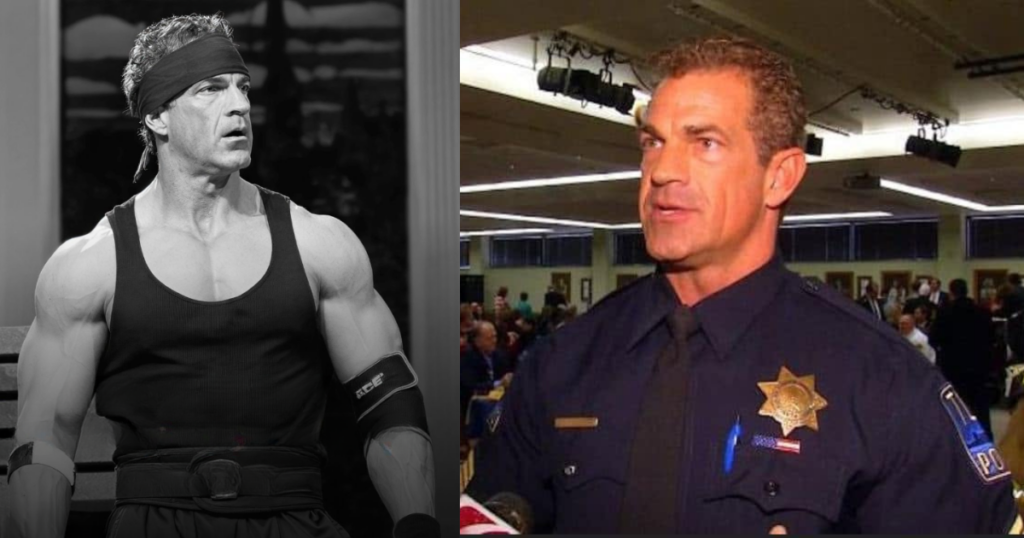
It was also during his police career that he became increasingly concerned about the health of his fellow officers. When he was assigned to develop a wellness program, he began studying the effects of high stress, disrupted sleep, irregular schedules, poor nutrition, insufficient exercise and unhealthy coping mechanisms.
What he saw among police officers appeared to be a concentrated version of what was beginning to affect the wider population.
“This whole idea of protection and service, as I studied, is not just about police anymore,” Dr. Sherwood said. “It’s about everybody.”
He eventually returned to school and became a traditional naturopathic doctor, completing additional training in areas including age management, nutrigenetics, nutrigenomics, peptide therapy, hormones, stress management, gastrointestinal health and immunology.
Together with his wife, Dr. Michele Neil-Sherwood, he built the Functional Medical Institute in Tulsa. Their work combines nutrition, movement, sleep, stress management, body composition, hormones, genetics and other elements of whole-person health.
The couple has co-authored seven books, produced eight health-focused feature films and developed educational events and programs intended to help people take a more active role in their health. Their newest book, “Authentic Longevity,” outlines their approach to maintaining strength, vitality and function throughout life.
The lesson that changed the way he saw fear
Some of Dr. Sherwood’s most enduring lessons did not come from a classroom or medical text.
During his police career, he repeatedly encountered a man he referred to as Daryl, whom he had taken to jail numerous times for alcohol-related behavior. Daryl was familiar to officers but had never been combative or especially difficult.
One morning, on a holiday, Dr. Sherwood saw him standing in the road and waving for his patrol car to stop.
Daryl asked to be taken to jail.
Dr. Sherwood initially assumed he was intoxicated. After speaking with him, however, he realized that Daryl was sober and had no outstanding warrants. There was no legal reason to arrest him.
As they talked, Daryl began to cry. Jail, he explained, provided a structure he did not experience outside it. He knew when he would wake up, when he would eat and what was expected of him. Outside, he felt overwhelmed by decisions, bills, responsibilities and uncertainty.
He understood that jail was not a good place for him. It was simply the place he knew.
That encounter changed the way Dr. Sherwood thought about people who remain in harmful circumstances even after recognizing that something needs to change.
“The fear of change is so big and so hard, they’d rather stay where they are,” he said.
Dr. Sherwood began seeing a parallel in health care.
“People are sick, and they know it, but they don’t know how to get out because there’s nobody to teach them, and the people they hang out with don’t help them,” he said. “We can be so scared of change, we don’t make change.”
He did not take Daryl to jail that day. Instead, they drove around and talked until Daryl felt ready to return home and spend the holiday with his family.
Dr. Sherwood does not know what ultimately happened to him. But he has never forgotten what the conversation revealed:
Information alone is not always enough. People also need a believable path forward, support from others and enough hope to take the first step.
Turning personal loss into a message of hope
Dr. Sherwood’s commitment to offering that hope was deepened by a devastating personal loss.
Near the end of his police career, while he was still serving on the SWAT team and traveling to schools to speak about bullying and suicide prevention, his mother died by suicide.
He had to tell his father that his wife of 47 years was gone. He then had to tell his own children that they had lost their grandmother.
The experience reinforced something he had already begun to understand through police work: Struggle is often invisible, and no one is completely immune to moments of hopelessness.
“Everybody struggles,” Dr. Sherwood said. “None of us are immune from those thoughts.”
Rather than allow the tragedy to become solely destructive, he made a conscious decision to turn it into something that might help another person.
That is why hope remains a recurring part of his work, even when he is discussing subjects as technical as genetics, hormones or mitochondrial biology.
For someone who feels trapped by the decisions of the past, his advice begins with the present.
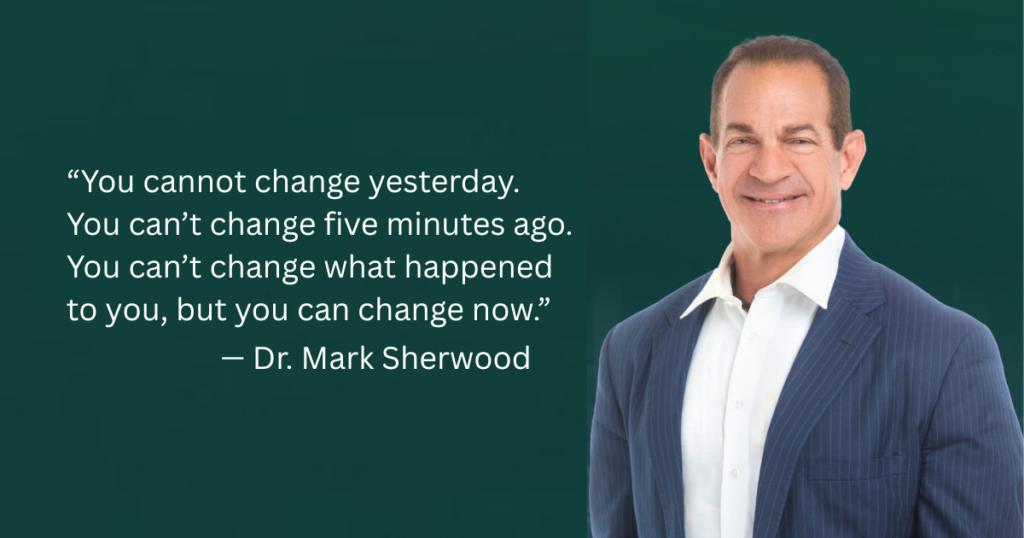
“You cannot change yesterday,” Dr. Sherwood said. “You can’t change five minutes ago. You can’t change what happened to you. You can’t change what you said to someone, but you can change now.”
Bringing clinicians and the public into the same room
Dr. Sherwood said one of the qualities that drew him to the Symposium for Metabolic Health was its ability to bring health professionals and members of the public together.
“It brings those two worlds together in a unique way,” he said.
Clinicians arrive with extensive education, clinical experience and the ability to interpret complex information. Patients and members of the public bring their own experiences, questions and growing access to medical and scientific information.
Dr. Sherwood does not see those groups as competitors. He believes meaningful progress will require them to learn from one another.
The public, he said, is increasingly responsible for introducing clinicians to new questions and ideas. At the same time, people need knowledgeable professionals who can help them distinguish promising evidence from misinformation and assemble disconnected facts into a thoughtful strategy.
For clinicians who feel constrained by a medical system built largely around managing established disease, the symposium can also provide evidence that other models are possible.
“The good thing for them is there’s a big old boat over here,” Dr. Sherwood said. “It’s called LowCarbUSA, you know, and there’s room on that boat. Get on the boat because you got support there.”
The Symposium is an event of the Society of Metabolic Health Practitioners hosted by LowCarbUSA. That partnership reflects the kind of community Dr. Sherwood described: physicians, researchers, nurses, health coaches and other practitioners learning alongside patients and health-focused members of the public.
More than a presentation
The San Diego event will be Dr. Sherwood’s first LowCarbUSA symposium, and he and Dr. Neil-Sherwood plan to attend throughout the four-day gathering.
Dr. Neil-Sherwood will give a separate presentation discussing intermittent fasting and ketones, including their potential application beyond weight loss as part of a strategy to improve body composition and preserve or build muscle.
The couple’s intention, Dr. Sherwood said, is not to arrive, give their presentations and disappear.
“I’m just not going to spend my time in the green room,” he said. “That’s not what I do. I will go out and talk to people and walk around and see what I can find out and see what I can learn myself.”
That willingness to remain accessible may be especially meaningful at a Symposium built not only around lectures, but around conversations between the people conducting research, applying it in clinical practice and living with the conditions being discussed.
Join Dr. Sherwood in San Diego
Dr. Sherwood’s presentation will be one part of four days devoted to metabolic health, therapeutic carbohydrate reduction and the prevention and treatment of chronic disease.
The 11th annual Symposium for Metabolic Health will take place Aug. 13-16, 2026, at the Wyndham San Diego Bayside Hotel. Attendees may participate in person or by livestream, and 28 AMA PRA Category 1 Credits™ are available.
The program will examine topics including insulin resistance, cardiovascular risk, neurological and mental health, women’s health, longevity, physical activity, behavior change, gut health and the implementation of metabolic therapies in clinical practice.
This year’s symposium will also include an entire special-focus day devoted to The Metabolic Roots of Obesity and Type 2 Diabetes.
That dedicated series of presentations will explore insulin resistance, hormonal regulation, inflammation and energy balance, along with the evolving role of GLP-1-based medications. Speakers will consider how those drugs may fit within a more comprehensive metabolic health strategy and what sustainable treatment may require beyond medication alone.
For Dr. Sherwood, however, the value of the gathering cannot be measured solely by the information presented from the stage. It is also found in the decisions people make after hearing it — and in the people they may influence when they return home.
“What you decide there, and what you do with that going forward, is not just changing your life,” he said. “It’s changing everything that’s going down before you, and every person you influence.”
Learn more about the 2026 San Diego Symposium for Metabolic Health and register today!