At the 10th Annual Symposium for Metabolic Health, a leading reproductive endocrinologist connects rising infertility rates to inflammation, diet, and modern lifestyle
At the 10th Annual Symposium for Metabolic Health in San Diego, Robert Kiltz MD—founder and director of CNY Fertility and a board-certified reproductive endocrinologist with more than four decades of clinical experience—delivered a presentation that challenged many of the foundational assumptions surrounding fertility, chronic disease, and nutrition.
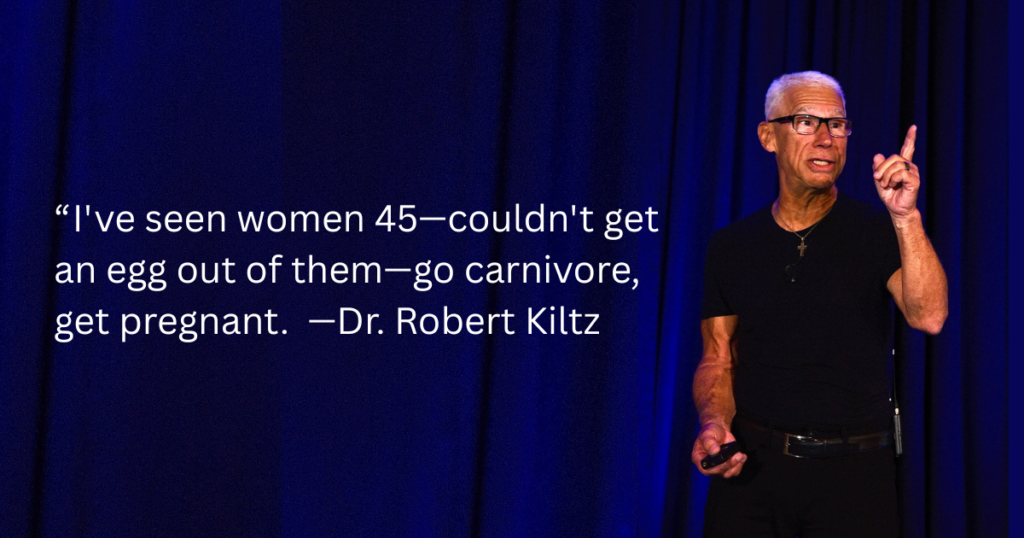
Dr. Kiltz, who has helped thousands of families navigate infertility and built one of the largest fertility practices in the United States, has increasingly become known for his innovative and thought-provoking views on diet and metabolic health. His approach blends traditional reproductive medicine with a broader focus on lifestyle, inflammation, and what he describes as root causes of disease.
At the center of his talk was a simple but far-reaching question: Why are reproductive disorders increasing—and what role might modern diet and metabolic dysfunction play?
“More and more people are suffering,” Kiltz said. “Pregnancy rates are dropping all around the globe.”
A Rising Tide of Reproductive Dysfunction
Kiltz outlined a wide range of conditions affecting women today, including polycystic ovarian syndrome (PCOS), endometriosis, uterine fibroids, infertility, and recurrent pregnancy loss. Many of these conditions, he noted, are becoming more common—and often remain poorly understood.
“Why are women suffering these diseases?” Kiltz said. “The answer is, I don’t know.”
That uncertainty, he argued, reflects a broader limitation within modern medicine, where many chronic conditions are labeled “idiopathic,” meaning their root causes are unknown.
“We still continue to get sicker and sicker, younger and younger,” he said, questioning whether existing frameworks fully explain the scope of the problem.
Drawing on both his clinical experience and personal observations over decades, Kiltz framed these trends not as isolated issues, but as part of a much larger shift in overall health.
Beyond biology, Kiltz also pointed to social trends—particularly delayed childbearing—as a contributing factor, noting that more people are waiting until their 30s and 40s to start families.
Inflammation as a Common Thread
A central theme of Kiltz’s presentation was the role of chronic, low-grade inflammation as a potential driver of both reproductive dysfunction and chronic disease.
“Chronic low-grade inflammation may be the cause of all disease,” he said.
Unlike acute inflammation—which presents with obvious symptoms such as pain, swelling, or redness—Kiltz emphasized that internal inflammation often goes undetected until more serious conditions emerge.
“What if these same things… happen on the inside, but you don’t know it until something serious happens?” he said.
He suggested that this underlying inflammatory state may help explain why seemingly healthy individuals can develop conditions such as infertility, cancer, or metabolic disease without clear warning signs.
Diet, Frequency, and Metabolic Stress
Kiltz devoted significant attention to modern dietary patterns, questioning both what people eat and how often they eat.
“What if everything we all believed about diet were wrong?” he said.
He pointed specifically to frequent eating patterns—often recommended in conventional nutrition—as a potential source of metabolic stress.
“How many people eat three to six meals a day? Your bowels are never empty… you’re simply fermenting,” Kiltz said.
In his view, constant digestion may contribute to inflammation, disrupt metabolic signaling, and ultimately impact reproductive health.
Kiltz contrasted this with approaches that reduce meal frequency, including intermittent fasting, which he described as a powerful metabolic tool.
“I think fasting is one of the best things that any human being can do,” he said.
The Gut–Reproductive Axis
Another key component of Kiltz’s framework is the relationship between gut health and reproductive function.
“The gut is the epicenter of all disease,” he said.
He described how microbial activity, fermentation, and inflammation in the gastrointestinal tract may influence nearby reproductive organs, particularly in women.
This perspective reflects Kiltz’s broader, integrative approach—one that combines conventional reproductive medicine with insights drawn from nutrition, lifestyle, and holistic care.
While this perspective remains an area of active research and debate, it reflects a growing scientific interest in the gut microbiome and its systemic effects—from immune function to hormone regulation.
Fertility, Energy, and the Role of Body Fat
Kiltz also emphasized the biological importance of adequate energy reserves for reproduction, particularly the role of body fat.
At the same time, he challenged the common assumption that body weight itself is the primary driver of disease.
“I believe that obesity doesn’t cause any diseases,” Kiltz said. “It’s the things that got you obese that causes the diseases.”
This distinction aligns with a metabolic health perspective that focuses less on weight alone and more on underlying processes such as insulin resistance, inflammation, and energy balance.
Clinical Observations and Patient Experience
Drawing on decades of clinical experience, Kiltz shared observations from his work with patients, including cases where changes in diet and lifestyle appeared to coincide with improvements in fertility.
“I’ve seen people return their fertility in a month, two or three,” he said, while noting that outcomes vary widely depending on age, underlying conditions, and other factors.
During the Q&A session after his presentation, Kiltz described cases where women in their mid-40s, previously unable to produce viable eggs, were able to become pregnant after adopting a carnivore type diet.
He also highlighted a recurring challenge in clinical practice: patients often describe their diets as “healthy” without clearly defining what that means.
“I ask everyone, ‘What do you eat?’” Kiltz said. “Healthy, organic and clean… that doesn’t tell me what you eat.”
Questioning Assumptions—and Expanding the Conversation
Throughout his presentation, Kiltz returned to a broader theme: the need to question long-standing assumptions in both medicine and nutrition.
“My job as a doctor is to think and look and question everything we’ve been taught,” he said.
That message resonated with the larger goals of the Symposium for Metabolic Health, which brings together clinicians, researchers, and patients to explore emerging ideas and challenge conventional thinking.
At the same time, Kiltz acknowledged the limits of current knowledge, frequently noting areas where definitive answers remain elusive.
“I don’t know the why part of it,” he said when discussing why some individuals develop specific conditions while others do not.
A Field Still Evolving
Kiltz’s presentation—like many at the Symposium—highlighted both the complexity of reproductive health and the growing interest in metabolic approaches to chronic disease.
Delivered with both conviction and curiosity, his talk reflected a willingness to explore new ideas while remaining grounded in decades of real-world patient care.
While some of his views remain controversial, they reflect a broader shift toward investigating root causes, individual variability, and the interplay between diet, metabolism, and long-term health.
For attendees, the value was not only in the answers presented, but in the questions raised.
“The only person responsible for your health is you,” Kiltz said.
As the field of metabolic health continues to evolve, conversations like these—grounded in clinical experience, open inquiry, and active debate—are likely to play an increasingly important role in shaping the future of care.
Continue the Conversation at the Symposium for Metabolic Health
If you missed the 2025 Symposium for Metabolic Health in San San Diego, it’s not too late to access the full experience.
Recordings from every presentation—including Dr. Kiltz’s talk—are available for purchase, along with 28 optional CME credits for qualified professionals. It also includes all Q&A’s and Panel Discussions. This provides an opportunity to revisit key sessions, dive deeper into the material, and continue learning at your own pace.
Looking ahead, the momentum continues this summer at the 11th Annual San Diego Symposium for Metabolic Health, taking place August 13–16, 2026. This year’s event will feature a special focus day devoted to understanding the metabolic roots of obesity and diabetes, bringing together leading clinicians, researchers, and practitioners for four days of education, collaboration, and practical insights.
The momentum carries into 2027 with the Symposium for Metabolic Health in San Antonio, scheduled for January 29–31, 2027. This conference will include a full day dedicated to food addiction—an increasingly important and often overlooked driver of metabolic disease.
Whether you’re joining in person or accessing sessions online, these events continue to serve as a hub for advancing metabolic health knowledge and connecting a growing global community committed to changing the trajectory of chronic disease.