A conversation about conferences, clinical change and why the mission is so important
When Doug Reynolds joined Dr. Brian Lenzkes on a recent episode of the LowCarbMD podcast, the conversation quickly became about much more than one upcoming conference.
Yes, the two discussed the 11th Annual San Diego Symposium for Metabolic Health, scheduled for Aug. 13-16 in San Diego.
Yes, they highlighted speakers, topics and special events being planned. And yes, they encouraged people to attend in person if they can.
But at the center of the conversation was a larger question:
How does a movement built around metabolic health, therapeutic carbohydrate reduction and real clinical outcomes continue to mature into something that can change standard care?
For Doug, co-founder of LowCarbUSA and The Society of Metabolic Health Practitioners, the answer has always involved bringing the right people into the same room.
“It’s been an incredible journey,” Doug said.
Brian, who has been involved with LowCarbUSA since the early years, said the changes have been striking. He remembered attending one of the first conferences and noticing how few physicians were in the room.
“Remember back in the day, the first conference I went to, I’m like, there’s no doctors here,” Brian said.
That has changed dramatically. Today, LowCarbUSA events bring together physicians, researchers, health coaches, nutrition professionals, patients and advocates, many of whom are trying to solve the same problem from different angles: chronic disease driven or worsened by metabolic dysfunction.
From one San Diego event to a growing professional society
Doug said much of what now exists through LowCarbUSA and The SMHP traces back to the first San Diego event in 2016.
“Everything came out of that one event that we put out in San Diego in 2016,” Doug said.
Since then, LowCarbUSA has expanded its conferences to include multiple locations and focus areas, while The SMHP has grown into a professional organization working to support practitioners, publish research and help define safer, more rigorous implementation of therapeutic carbohydrate reduction.
Brian said one of The SMHP’s important roles is helping clinicians move beyond anecdote and turn clinical experience into publishable evidence.
“Having these case reports, it just moves the science forward,” Brian said.
Doug pointed to Dr. Melanie Tidman’s work with The SMHP Research Academy as one example of that mission in action. He said Dr. Tidman has developed a program that helps practitioners take clinical data, document outcomes and work toward publication.
“She has developed this whole research academy program and is coaching people who want to take their data or run a trial in their practice, and then document it and publish it,” Doug said.
That work matters because many clinicians are seeing powerful results in practice, but isolated clinical experience is not enough to change the larger system. The movement needs case reports, guidelines, research infrastructure and a professional community willing to ask better questions.
The next step: implementation guidelines for therapeutic carbohydrate reduction
One of the most important updates Doug shared involved The SMHP’s implementation guideline for therapeutic carbohydrate reduction, or TCR.
Doug said Sarah Rice has led a major effort to rewrite and update earlier guidelines with input from a large panel of experts.
“She’s absolutely fantastic, and she has basically rewritten those guidelines with a lot of input from some amazing people,” Doug said. “We have 27 people on the Delphi review panel this time.”
The updated document, now being called the implementation guideline for TCR, is in review with the Journal of Metabolic Health.
Doug said the new version is supported by far more scientific literature than was available when earlier guidance was developed.
“What Sarah’s done is produce this document that is fully referenced and supported by the literature,” Doug said. “It’s going to be very impactful, I think, for so many people.”
He said the document may be especially helpful for clinicians who are interested in carbohydrate restriction but hesitant because it has not always been viewed as standard care.
“Maybe it’ll also make a difference for the doctors that are on the fence,” Doug said. “They kind of look at it and say, ‘Well, it does look like the stuff works, but that’s not standard of care.’ And this document is going to help a lot with that.”
For Brian, that is the point. He said the goal from the beginning was not simply to tell isolated success stories, but to show that clinicians around the world were seeing similar results.
“People around the world are having the same results,” Brian said. “We’re not making up these numbers, and these people are real people that we’re talking about here.”
San Diego returns Aug. 13-16
The 2026 San Diego Symposium for Metabolic Health will take place Aug. 13-16 and will return to the Wyndham San Diego Bayside, a familiar location for many longtime attendees.
After holding last year’s event elsewhere, Doug said LowCarbUSA is returning to a venue where the staff understands the needs of the event and the chef is enthusiastic about preparing the low-carb dinners that have become a signature part of the San Diego experience.
“We’re going back to our friends at the Wyndham, who we’ve been with for many years,” Doug said. “The chef’s super excited. He loves cooking those low-carb dinners.”
The event will again include lectures, Q&As, panel discussions, networking and the informal conversations that often become one of the most memorable parts of the weekend.
Doug also said during the podcast that LowCarbUSA was exploring the possibility of showing The Cholesterol Code, the documentary centered on Dave Feldman’s research and personal story, on the evening of Aug. 12 for those who arrive early. Details have since been finalized that it will be shown at the hotel at 7:00 pm after early registration.
A focus day on obesity and type 2 diabetes
This year’s special focus day will be devoted to the metabolic roots of obesity and type 2 diabetes.
LowCarbUSA has previously hosted focus days on topics such as type 1 diabetes, food addiction, mental health, neurological conditions, women’s health, and cancer. Doug said someone recently asked why they had not yet devoted a focus day to type 2 diabetes.
“I think it was at the last meeting that somebody said to me, ‘Why haven’t we had a focus on type 2 diabetes?’” Doug said. “It was almost like, that’s what we always talk about.”
But that realization made the decision clear.
“There’s actually so much more to it, and so we decided, OK, we’re going to make a proper focus,” Doug said. “The whole first day is going to be talks on obesity and type 2.”
For clinicians and patients alike, that topic remains central. Type 2 diabetes, obesity, insulin resistance, fatty liver disease, cardiovascular disease and other metabolic conditions are deeply connected, and many practitioners in the LowCarbUSA community believe the conventional approach too often manages progression rather than addressing root causes.
Brian said diabetes has been one of the central concerns from the beginning, pointing to its role in blindness, coronary disease, renal failure, amputation and disability.
That is part of why the San Diego focus day may be especially valuable for clinicians who want practical, clinically relevant information they can bring back to their practices.
A speaker lineup built for science, practice and real-world impact
Doug said the full speaker lineup is still being finalized, but he and Brian discussed several confirmed and expected speakers during the podcast.
Gary Taubes, a longtime supporter of LowCarbUSA, is expected to return for his 11th San Diego event. Doug also highlighted Dr. Robert Cywes, Dr. Ben Bocchicchio, Dr. Robert Kiltz, Dr. Lily Johnston, Dr. Elena Gross, Dave Feldman, Dr. Michael Hoffmann and Siobhan Huggins, among others.
Brian said one of the strengths of the San Diego Symposium is that it brings together researchers and frontline clinicians in a way that helps translate science into practice.
“What Doug’s done is allowed us clinicians, who are on the front line seeing patients, to really look at the research that’s being done and say, let’s implement that and see what happens in practice,” Brian said.
He said the conference also creates space for patient stories and clinical observations that may spark new questions.
“Doug brings back the greatest minds,” Brian said. “Then we have people who are sharing their testimonies or stories, just Joe Schmo down the street who decided to do keto or low carb, or focus on metabolic health, and how his life changed.”
That combination of research, clinical practice and personal transformation is part of what has made the San Diego Symposium distinct. It is not simply a scientific meeting. It is not simply a patient conference. It is a place where multiple parts of the metabolic health movement intersect.
Why in-person attendance is different
Both Doug and Brian emphasized that livestream access is valuable, especially for people who cannot travel. But both also said there is no true substitute for being in the room.
“I know it’s hard,” Doug said. “I know you have to take time off work, and you have to buy plane tickets, and you have to book hotel rooms. But if there is any way that you can swing it, there’s no comparison.”
Brian agreed, comparing the in-person experience to attending a concert rather than hearing about it afterward.
“It’s hard to explain it,” Brian said. “It’s kind of like if you go to a concert and you feel the impact.”
He said one of the most valuable parts of the event is the access attendees have to speakers and other participants.
“A vast majority of the presenters, they’ll sit there and talk to you at lunchtime,” Brian said. “They’ll go for a walk with you and talk about stuff. If you have questions, they answer.”
Doug recalled a vendor from a previous San Diego event who had no background in low carb but was struck by the atmosphere.
“This is incredible,” Doug recalled her saying. “It’s like one huge family.”
For Doug, that reaction captured something LowCarbUSA has intentionally tried to build.
“That’s what we’ve been striving to do,” he said, “to try to cultivate a community of people that support each other and have the same things in mind.”
A place where questions are still welcome
The conversation between Doug and Brian also returned several times to the importance of questioning assumptions.
They discussed figures such as Dave Feldman, Ivor Cummins, Dr. Jason Fung, Dr. Ben Bikman and others who have challenged parts of the conventional model by asking whether the data truly support the assumptions many clinicians were taught.
Doug said that is the essence of science.
“That’s the whole point of science,” he said. “You better keep asking questions, and don’t ever become complacent and think you know everything.”
Brian said that spirit is part of what makes these events valuable. People come with strong ideas, but they also encounter new data, new clinical observations and people who may challenge their assumptions.
“We’re all learning, we’re all trying different things, and we’re trying to figure this out for us all,” Brian said. “It’s not a one-size-fits-all.”
That openness is important because metabolic health is not a single-topic field. It includes diabetes, obesity, cardiovascular disease, neurological disease, mental health, lipedema, migraine, exercise, nutrition, aging and more. The San Diego Symposium is designed to reflect that breadth while giving this year’s opening focus day the depth that obesity and type 2 diabetes deserve.
The work continues
Near the end of the episode, Brian asked Doug what keeps him motivated after years of financial risk, logistical stress and the challenges of building conferences and professional organizations from the ground up.
Doug did not point to prestige, growth metrics or organizational milestones. He pointed to the people who have been helped.
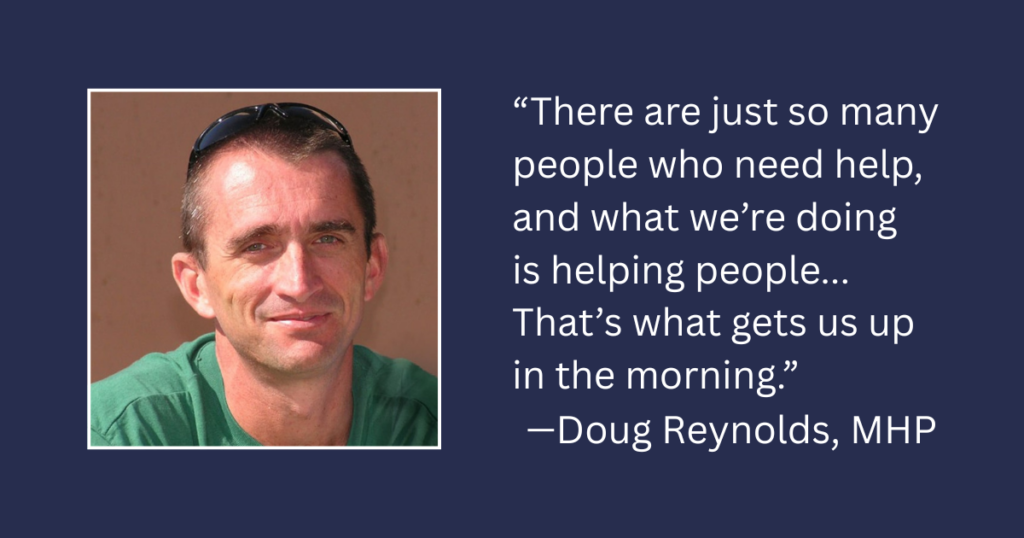
“Getting to hear how what we’ve done has helped so many people, in small ways in some cases, and in monumental ways in other cases, honestly, that’s what gets us up in the morning,” Doug said. “There are just so many people who need help, and what we’re doing is helping people.”
That is the heart of the San Diego Symposium.
It is a place to learn from leading researchers and clinicians.
It is a place to hear new data, ask better questions and meet others who are working to change the future of chronic disease care.
It is also a place to be reminded that behind every guideline, paper and lecture are real people looking for better answers.
For those who cannot attend in person, livestream registration is available.
Doug said recordings from each day are posted for attendees, and individual talks are later separated and made available to in-person and livestream attendees.
But for those who can make the trip, Doug and Brian made their recommendation clear: Be there.
The 11th Annual San Diego Symposium for Metabolic Health takes place Aug. 13-16 in San Diego. As Brian put it, “It’s really worth your time to go.”