
At the San Diego Symposium, the board-certified radiologist will reveal what medical imaging can teach us about hidden metabolic dysfunction — and why sustainable change requires more than information alone
A person can appear thin and still carry a significant amount of fat around the organs.
Another person can live in a larger body while carrying much of that fat in locations that may pose less metabolic risk.
The bathroom scale cannot tell the difference. Neither can body mass index.
Dr. Ana Rosa believes medical imaging can reveal what those measurements may miss.
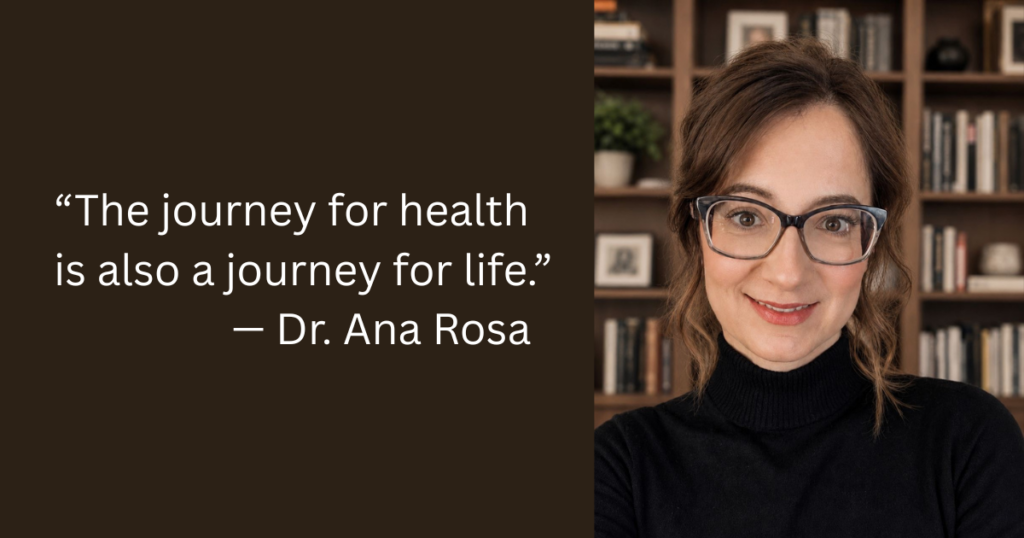
The radiologist, who is board-certified in both the United States and Brazil, will deliver two presentations at the 2026 Symposium for Metabolic Health, scheduled for Aug. 13-16 at the Wyndham San Diego Bayside Hotel.
Her first presentation, “Visceral Fat and Inflammation,” is scheduled for 9:30 a.m. Saturday, Aug. 15. Her second, “The Science of Gratitude for Metabolic Health,” is scheduled for 1:45 p.m. Sunday, Aug. 16. Both sessions are eligible for continuing medical education credit.
Together, the presentations will connect two aspects of metabolic health that are not often discussed in the same room: 1) what is happening inside the body and 2) what gives a person the strength to change it.
What the Mirror and Scale Can Miss
During her first presentation, Dr. Ana Rosa will use medical images to demonstrate how metabolic dysfunction can appear in the liver, pancreas, muscles, brain and the fat surrounding the heart.
She will pay particular attention to visceral fat — fat stored deep within the abdominal cavity and around the organs — as well as the important differences between visceral fat and the subcutaneous fat stored beneath the skin.
“We have the thin outside, fat inside,” Dr. Ana Rosa said.
That distinction matters because outward appearance does not always reflect internal metabolic health.
A person whose weight or BMI falls within a conventionally normal range may still carry visceral fat or fat within the liver, pancreas and muscles.
Meanwhile, a person with a higher body-fat percentage may store a larger proportion of it as superficial subcutaneous fat.
Dr. Ana Rosa wants people to understand that the total amount of fat in the body is only part of the story. Its location and characteristics can be just as important.
Her presentation will include images showing visceral fat, fatty liver, pancreatic fat, changes in the brain associated with metabolic dysfunction and fat surrounding the heart. She will discuss how those findings may be connected to insulin resistance, chronic inflammation, cardiovascular disease and other chronic conditions.
Her educational work focuses on visceral adiposity, metabolic dysfunction-associated steatotic liver disease, or MASLD (previously callednon-alcoholic fatty liver disease); sarcopenia; myosteatosis, or fat infiltration within muscle; pancreatic fat; and brain changes associated with metabolic disease.
Making Imaging Part of Prevention
Dr. Ana Rosa earned her medical degree from the Federal University of Goiás in Brazil and her doctorate in imaging medical sciences from the University of São Paulo. She completed radiology residency and fellowship training in Brazil and the United States, including advanced training at the University of Minnesota.
She believes radiology is too often used to document advanced disease rather than to identify warning signs that may appear years before a major medical event.
Dr. Ana Rosa wants to see that change.
She describes radiology as “a gateway door to prevent metabolic disease” and plans to make the case for using imaging earlier, when patients may still have an opportunity to address the processes moving them toward diabetes, cardiovascular disease and other chronic conditions.
Her presentation will compare the information provided by a DEXA scan with the information available through an abdominal MRI.
A DEXA scan can help track whether a person is losing fat while maintaining or gaining muscle and bone. Dr. Ana Rosa views it primarily as a tool for evaluating someone’s trajectory over time.
An abdominal MRI, by comparison, can reveal where fat is being stored. It can help distinguish superficial subcutaneous fat from visceral fat and identify fat within organs and muscles.
The abdominal MRI she will discuss does not require intravenous contrast or use ionizing radiation. That makes it different from a CT scan in important ways, particularly when considering follow-up imaging.
Dr. Ana Rosa believes radiology could play a greater role in recognizing metabolic dysfunction before a patient develops high blood pressure, prediabetes, diabetes, abnormal liver tests or a major cardiovascular event.
The goal is not simply to produce a more sophisticated image.
It is to give patients and practitioners information they can act on before metabolic dysfunction progresses into advanced disease.
A Personal Journey Behind the Science
Dr. Ana Rosa’s interest in metabolic health is not purely academic.
After her husband died 10 years ago, she reached 226 pounds and found herself using food to numb grief, sadness, longing and guilt.
She eventually lost weight, regained it and became caught in a recurring cycle whenever another emotional trigger appeared.
Over time, she began to understand that a temporary intervention would not be enough.
“The journey for health is also a journey for life,” she said.
“We need sustainable success.”
Her reasons for pursuing better health also became deeply connected to her family. Her grandmother lived with diabetes and experienced blindness, a heart attack and limb amputations. Her father died following a hip fracture after developing significant sarcopenia, osteopenia and visceral fat.
Dr. Ana Rosa realized that information alone would not necessarily produce lifelong change. She needed a reason powerful enough to help her continue when the process became difficult.
She needed what she calls a “deep why.”
That realization now shapes the message she shares with others. A nutrition plan, exercise program or fasting protocol may be useful, but lasting success requires people to understand what their effort is protecting and why it matters.
For Dr. Ana Rosa, the answer is grounded in faith, gratitude and a sense of responsibility for the body she has been given.
“My body is the instrument of my soul, and I’m here to rejoice every day,” she said.
Stacking Strategies Without Creating Overwhelm
Dr. Ana Rosa’s presentation will not stop with identifying visceral fat. She will also discuss practical strategies that may help people improve their body composition and metabolic health.
Those strategies include nutrition, adequate protein, walking, strength training, sprinting or other brief high-intensity intervals, fasting, sleep, sunlight exposure and hormetic stressors such as sauna and cold exposure.
But she does not believe people must treat each strategy as a separate project.
Instead, she encourages people to “stack” healthy behaviors so that one small block of time accomplishes several things at once.
A person might break a fast with a protein-rich meal and then take a walk outside. That walk may help manage the post-meal glucose response while also providing movement, sunlight, hydration and time to reflect, practice gratitude or connect with a friend.
“Walking is underused. Squatting is underused,” Dr. Ana Rosa said.
Sleep is another major part of her message.
“Sleep is definitely underrated,” she said. “Sleep is extremely important.”
Her approach is deliberately designed to reduce the sense of pressure that causes many people to abandon a health plan altogether. She emphasizes progress without perfection and taking one step at a time without becoming overwhelmed.
“If you are overwhelming yourself, you’re going to give up,” she said.
Rather than searching for a perfect protocol, Dr. Ana Rosa wants people to identify a few actions they can repeat consistently and then build from there.
Gratitude Is Not ‘Fluffy’
Dr. Ana Rosa’s second presentation will take the audience from images of the body to activity within the brain.
In “The Science of Gratitude for Metabolic Health,” she will explore research involving gratitude, stress, sleep, attention and emotional regulation. She will also discuss functional brain imaging and the neurological processes that may help explain why a regular gratitude practice can change what people notice and how they respond to difficult circumstances.
“Gratitude is not positive thinking; it’s not fluffy, fluffy,” Dr. Ana Rosa said. “Gratitude is life.”
She will offer simple ways to develop the practice, including naming three things you are grateful for in the morning, identifying one victory from the day before going to sleep and using slow breathing with a hand placed over the heart.
The practice does not require pretending that pain, loss or difficulty does not exist.
It changes the question.
“What does life want from me right now?” Dr. Ana Rosa asks.
That distinction grew out of her own experience with grief. She does not describe herself as grateful that her husband died. She is grateful for the love and life they shared — and for the fact that the relationship was meaningful enough to grieve.
“I was grieving because I had his love in the physical body, and I have his love forever,” she said.
“I’m grateful for the love, I’m grateful for the memories, I’m grateful for the life we built together.”
A decade later, the gratitude practice that helped her continue through grief has become an essential part of the metabolic health message she shares with patients, practitioners and audiences.
It also provides a bridge between knowing what to do and becoming capable of doing it.
When knowledge is combined with awareness and a deliberate pause, she said, “We are able to make a different choice, a choice that loves us back.”
Why Dr. Ana Rosa Is Coming to San Diego
This will be Dr. Ana Rosa’s first time speaking at a LowCarbUSA event.
She has previously spoken about metabolic health to audiences outside medicine and has seen how the information can change lives. She is particularly enthusiastic about bringing her message to a conference attended by physicians, researchers, health coaches and other practitioners who can carry these ideas into their work.
She hopes the symposium can help build stronger connections between radiology and the medical specialties treating the consequences of metabolic dysfunction.
“We are going to be building health,” she said.
Dr. Ana Rosa also sees an opportunity to help medical professionals recover a sense of meaning in their work.
Physician burnout is personal to her. She believes practitioners need better tools to address the causes of chronic disease rather than repeatedly managing its downstream consequences.
She is currently completing coursework through the Society of Metabolic Health Practitioners and said she is encouraged by clinicians who are willing to challenge established assumptions and speak publicly about therapeutic carbohydrate reduction, insulin resistance and metabolic health.
“I am definitely hopeful,” she said.
Her larger goal is to help create a health care system that recognizes visceral fat and other imaging findings as important signs of metabolic dysfunction — and that responds before a patient reaches the hospital with advanced disease.
“We are able to build a different life, a different health, and with joy that we deserve, and honoring our bodies,” she said.
Attend the 2026 Symposium for Metabolic Health
The 2026 Symposium for Metabolic Health will take place Aug. 13-16 at the Wyndham San Diego Bayside Hotel.
The conference is an event of the Society of Metabolic Health Practitioners hosted by LowCarbUSA. It can be attended in person or by livestream.
This year’s symposium will include a full Special Focus Day devoted to “The Metabolic Roots of Obesity & Type 2 Diabetes.” Sessions will examine insulin resistance, inflammation, hormonal regulation, energy balance, sustainable obesity treatment and the role of GLP-1-based therapies within a broader metabolic health strategy.
The remainder of the four-day program will explore therapeutic carbohydrate reduction and a wide range of metabolic therapies and related topics, including:
- Cardiovascular disease and chronic disease prevention
- Neurological and mental health applications of metabolic therapy
- Women’s health, polycystic ovary syndrome and menopause
- Longevity, healthspan and preventive cardiometabolic care
- Physical activity, exercise physiology and behavior change
- The microbiome and gut health
- Low-carbohydrate and ketogenic approaches
- Agriculture, food systems and environmental health policy
The symposium is designed for medical and health professionals as well as patients and members of the public who want a deeper understanding of metabolic health.
Up to 28 AMA PRA Category 1 Credits™ are available.
For Dr. Ana Rosa, the event represents an opportunity to help people see what may be developing beneath the surface — and to remind them that the next decision does not need to be perfect or overwhelming.
It only needs to be a choice that moves them toward health.
One choice at a time.