‘The Sod Father’ will speak at the 11th Annual Symposium for Metabolic Health, Aug. 13–16, 2026
Peter Ballerstedt, PhD, has become one of the familiar faces of the Symposium for Metabolic Health in San Diego.
That is largely because of his expertise. Dr. Ballerstedt, known to many in the metabolic health community as “The Sod Father,” has a doctorate in forage management and ruminant nutrition. He has spent decades working in agriculture, grazing systems, sustainability and animal nutrition.
But his appeal at LowCarbUSA events goes beyond credentials.
Dr. Ballerstedt has a rare ability to stand between worlds that often talk past each other. He speaks to ranchers, researchers, clinicians, patients, nutrition advocates and skeptics. He challenges assumptions about meat, health, sustainability and food systems without sounding combative. He brings evidence, humor and a sense of mission.
He also brings a personal story.
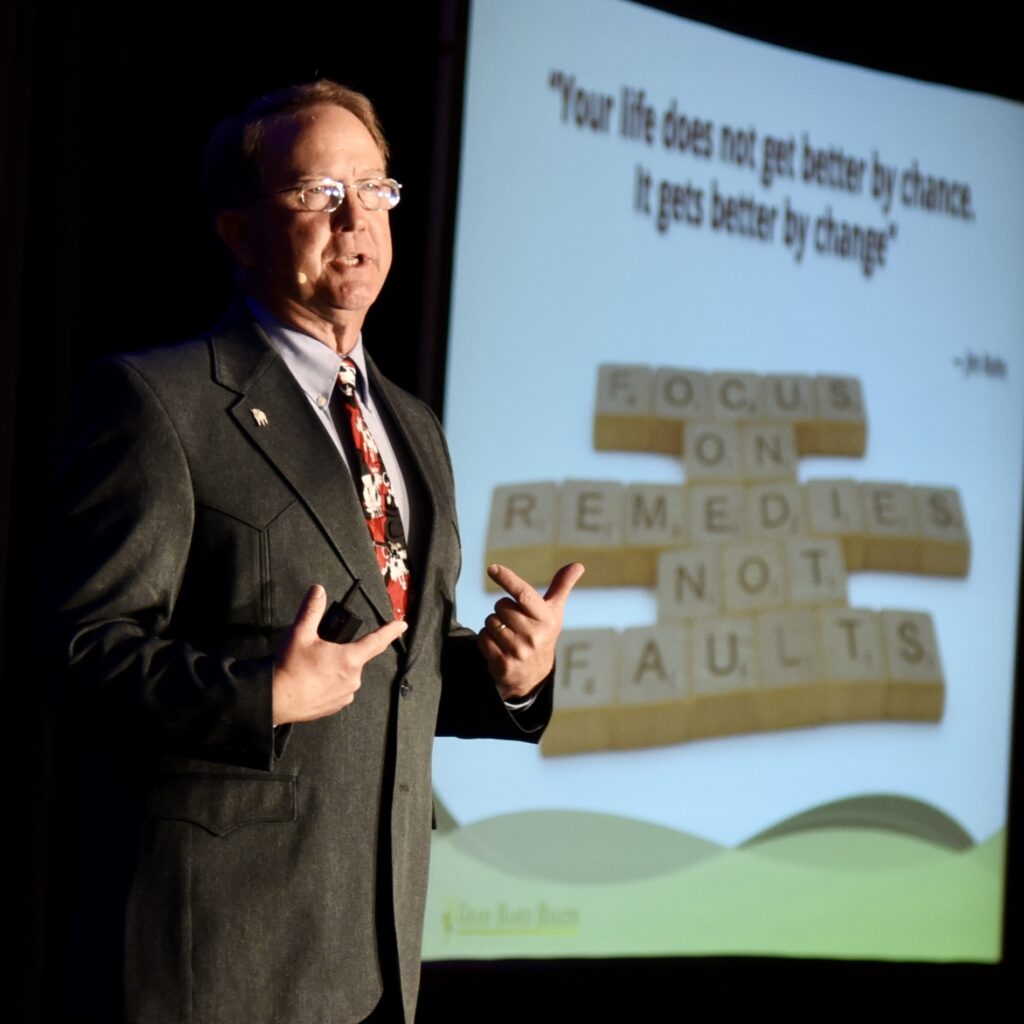
During a recent Ovadia Heart Health Telemedicine livestream hosted by Ovadia Heart Health coach Chris Cornell, Dr. Ballerstedt joined Cornell for a wide-ranging conversation about the upcoming 11th Annual Symposium for Metabolic Health, set for Aug. 13–16, 2026, at the Wyndham San Diego Bayside Hotel.
The conversation moved from Dr. Ballerstedt’s own health journey to malnutrition, ruminants, meat, sustainability, protein quality, chronic disease, and why he believes gatherings like the San Diego Symposium are so important.
“Like many, I’ve had my own personal health journey,” Dr. Ballerstedt said.
That journey eventually led him to the same place it has led many others in the low-carb and metabolic health community: a reassessment of the conventional advice around food, chronic disease and animal-source nutrition.
“Over time I really came to believe that the farmers and ranchers that I’d been trained to support the products of their efforts have been unfairly accused of being health hazards,” Dr. Ballerstedt said. “And in fact the more I learned, the more I came to believe it was exactly the opposite of what we’ve been trained to believe.”
That conviction has shaped much of his work over the last 15 years. It also explains why he keeps returning to San Diego.
Building Bridges Between Food Systems and Metabolic Health
Dr. Ballerstedt often describes his role as bridge-building.
He was trained in forage agronomy and ruminant nutrition. He worked in grazing systems management and Cooperative Extension, helping producers and conducting research.
Later, after his own metabolic health challenges, he began seeing a deeper connection between the work of agriculture and the emerging science of therapeutic carbohydrate reduction.
“I really have developed this kind of role of building bridges between the communities that I’m now a part of,” he said. “And they’re naturally connected, but because of a lot of factors that we could talk about, we haven’t been good at engagement across that divide, across the bridge that maybe already exists, whatever the metaphor you want to use.”
That bridge-building has become one of his defining contributions.
In one direction, he brings the metabolic health message to agricultural and ruminant nutrition audiences. In the other, he helps low-carb and ketogenic audiences better understand grazing systems, livestock, ruminants and the role of animal-source foods in human nutrition.
His nickname grew from that work. As people began learning from him about ruminants and food systems, some began referring to the growing community as the “Ruminati.” Then came the title.
“Somebody else finally said, ‘Yeah, but your name, you’re Don Pedro, the Sod Father of the Ruminati,’” Dr. Ballerstedt said. “So that’s where all that comes from.”
The name is lighthearted. The message is not.
‘The Fat of the Land’
At the 2026 San Diego symposium, Dr. Ballerstedt plans to speak on a topic he is calling “The Fat of the Land,” a title that nods to the history of low-carbohydrate and ketogenic diets while pointing toward a pressing modern question: If properly formulated ketogenic diets become more widely adopted, where will the fat come from?
The question was sharpened for him by a presentation Stephen Phinney gave at the Society for Range Management.
“In Stephen Phinney’s presentation, he asked the very reasonable question that if we put 100 million adult Americans on a properly formulated ketogenic diet, where is the animal fat going to come from, do we have enough? And so that got me digging into the numbers..”
For Dr. Ballerstedt, that question quickly becomes bigger than macros. It becomes a question about food systems, land use, chronic disease and whether modern nutrition policy has undervalued both fat and animal-source foods.
“I think it’s clear from the research that fat is the macronutrient that has been short changed in the Western diet, or the modern diet,” he said. “And if we’re going to see a meaningful change in chronic disease burden, we’re going to need more fat, not less, globally.”
That leads directly back to ruminants.
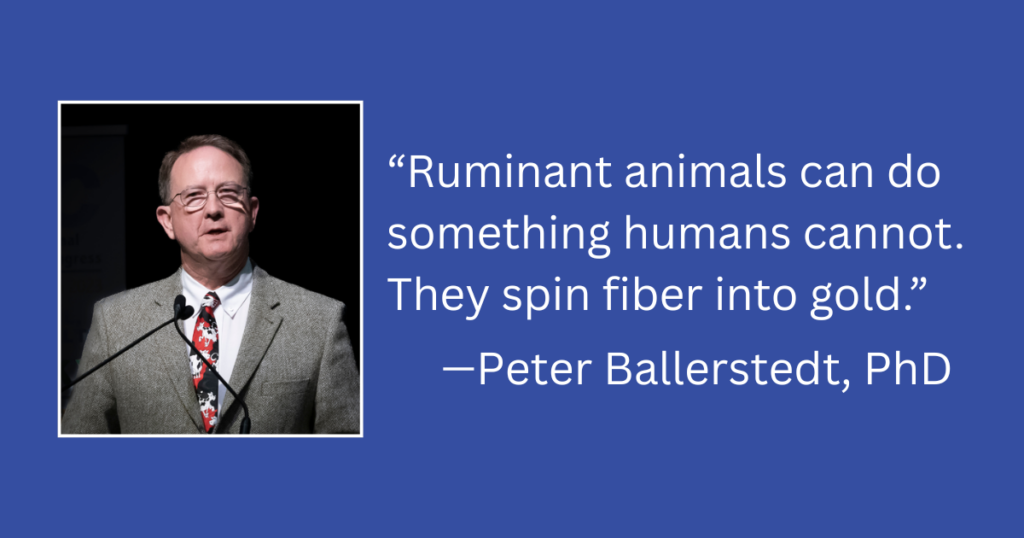
Ruminant animals can do something humans cannot. They can turn cellulose and other fibrous plant material into nutrient-dense food. Dr. Ballerstedt describes them, with typical humor, as “ruminant Rumplestiltskin.”
“They spin fiber into gold,” he said.
Rethinking Malnutrition
One of Dr. Ballerstedt’s most important arguments is that the way we commonly discuss malnutrition is too narrow.
The conventional framing tends to separate malnutrition into undernutrition and overnutrition. In that model, undernutrition is not enough food and obesity is too much food.
Dr. Ballerstedt believes that framework misses the point.
“My definition of malnutrition now is any diet that evokes a metabolic derangement,” he said.
That definition changes the conversation. It suggests that malnutrition is not limited to people who lack calories. It may also include people consuming enough, or even too much, energy while failing to receive the nutrients needed for metabolic health, brain development, physical growth and long-term function.
That distinction matters because chronic disease is no longer limited to affluent nations. Obesity, type 2 diabetes and metabolic dysfunction are now global problems. Dr. Ballerstedt argues that if chronic illness is driven in large part by poor nourishment, then the nutritional quality of the global food supply has to be part of the solution.
Asked by Cornell about his statement that humanity’s existential crisis is malnutrition, Dr. Ballerstedt pointed to a range of obstacles, including environmental constraints, economic development and legal systems. But he emphasized one issue in particular.
“One of the things I’m convinced that holds back development is a lack of access to animal source foods,” Dr. Ballerstedt said.
He points to the physical, cognitive and economic implications of poor nutrition, especially in children. He also argues that the burden of chronic disease carries costs that are often left out of conversations about sustainability.
“What’s the societal drag on lives that are diminished when you’re looking at intergenerational relationships?” he said.
In Dr. Ballerstedt’s view, the answer is not simply more calories. It is better nourishment, including greater access to high-quality animal-source foods.
Meat, Ruminants and Sustainability
Dr. Ballerstedt is careful not to suggest that livestock systems are automatically beneficial regardless of how they are managed. His point is more precise: Food systems cannot be called sustainable if they ignore the essential role of livestock.
“You cannot be for sustainable food systems if you’re anti-livestock,” he said.
That argument begins with land. Much of the world’s land is not suitable for producing grains, legumes or other crops for direct human consumption. Ruminants can graze land that humans cannot farm in the same way, converting forage into meat and dairy.
He also argues that crop agriculture and animal agriculture are far more integrated than many people realize.
“People speak about animal agriculture and crop agriculture as if those are two separable things,” Dr. Ballerstedt said. “And the point needs to be made that they’re completely integrated, looks different in different parts of the world, but without livestock something like almost a half of the food that’s grown globally depends on manure for the nutrients, so you get rid of livestock. What are you going to do to replace the fertilizer?”
He points to manure, draft animals, grazing systems and soil health as part of the broader picture. He also warns that public conversations about livestock often fail to weigh the nutritional and health consequences of reducing animal-source foods, particularly in populations already struggling with metabolic disease or inadequate nutrition.
For Dr. Ballerstedt, the goal is not nostalgia. It is a more mature conversation.
“We just haven’t had a mature conversation about priorities,” he said.
Why the Symposium Matters
That kind of conversation is one reason Dr. Ballerstedt keeps returning to the Symposium for Metabolic Health.
The 2026 San Diego event will include a dedicated Focus Day on obesity, type 2 diabetes and metabolic therapies, along with broader discussions of therapeutic carbohydrate reduction and metabolic health. During the livestream, Cornell also noted that attendees can save 20% on this year’s symposium, whether attending in person or virtually, with the code IFIXHEARTS.
But Dr. Ballerstedt says the value of the event is not just the lecture hall.
It is the community.
“There’s just tremendous opportunities to speak to people, get to know each other, ask questions, learn,” he said.
He contrasted the San Diego Symposium with events where speakers and attendees are separated by what he calls “the velvet rope.”
“None of that takes place,” he said.
That open exchange matters because many people who discover low-carb or ketogenic nutrition first feel isolated. They may be the only person in their family, clinic, workplace or friend group questioning the conventional wisdom.
“So many of us, when we start, it’s almost like, you know we’re these crazy people and we’re all by ourselves,” Dr. Ballerstedt said.
The Symposium gives those people a place to learn from researchers, clinicians and patients while also forming relationships that can sustain the work long after the event ends.
“So, if anyone has the opportunity to either attend virtually or to attend in person, I would strongly and wholeheartedly recommend that they do that,” Dr. Ballerstedt said.
An SMHP Ambassador and Bridge-Builder
Dr. Ballerstedt has also become closely connected with the Society of Metabolic Health Practitioners, the organization dedicated to supporting clinicians, researchers, coaches and others working in the field of metabolic health and therapeutic carbohydrate reduction.
He has been involved with The SMHP since its early days, even though he is not a medical professional. That perspective has shaped his contribution.
“What about non-medical professionals?” he said.
His answer has been to help bring the metabolic health message into communities that may not otherwise encounter it, including agricultural, forage and grazing organizations. At some events, he has exhibited with SMHP materials. At others, he has organized panels or brought in clinicians and researchers to speak about metabolic health, animal-source foods, saturated fat, obesity, cancer and chronic disease.
Ballerstedt tends to describe that work modestly, but the effort behind it has been substantial. Over the last several years, he has become one of The SMHP’s most active ambassadors, not merely by lending his name to the organization, but by showing up in person, often at his own initiative and expense. He has secured exhibition tables at agricultural and grazing events, created his own signs and tablecloths, printed flyers, purchased books and materials to share, and used poster presentations to show others how they can become ambassadors for metabolic health within their own professional communities.
It is bridge-building in the most practical sense: meeting people where they already are and bringing the metabolic health conversation into rooms where it might not otherwise take place.
These efforts reflect a broader philosophy. Not everyone needs to be a physician, researcher or public speaker to contribute.
“We don’t all need to be professionals with this,” Dr. Ballerstedt said. “We find a way that we can contribute, that we can be models, we can be persuasive.”
He offered a simple example from his wife, Nancy, who has encouraged their local library to carry important books on nutrition and health. When those books are added, people check them out.
That, too, is bridge-building.
‘We Have the Best Story Going’
Dr. Ballerstedt’s message is serious, but it is also hopeful.
He believes the agricultural and metabolic health communities have a powerful story to tell. They simply need to tell it better.
“I think we have the best story going,” he said. “We just haven’t been very good at telling it.”
That story includes the possibility that many chronic conditions are not inevitable. It includes the possibility that better nutrition can produce meaningful improvements quickly. It includes the possibility that meat, dairy, eggs and seafood are not problems to be minimized, but essential foods that may help restore health.
Dr. Ballerstedt often summarizes that message with a memorable prescription.
“Dr. Ballerstedt says to be sure to take your daily meds, which stands for meat, eggs, dairy, seafood,” he said.
The advice is not meant as a one-size-fits-all diet. He emphasizes what is appropriate, available and affordable for the individual. But he encourages people who are dissatisfied with their health to consider a serious experiment with higher-quality nutrition.
“Try it for three months,” he said. “Keep track of what changes.”
That spirit fits the larger tone of the San Diego symposium. It is scientific, but not detached. It is practical, but not simplistic. It brings together researchers, clinicians, coaches, advocates and individuals who have seen what can happen when metabolic health improves.
For Dr. Ballerstedt, the long-term vision reaches far beyond one conference.
“What problems do you think that 9 billion properly nourished human brains, interconnected and communicating, won’t be able to solve?” he said.
It is an optimistic question, but not a naive one. It recognizes the scale of the challenge while refusing to accept decline as inevitable.
That may be why Dr. Ballerstedt has become such a fixture in San Diego. He does not simply argue for meat, ruminants or low-carb nutrition. He argues for a better-fed, healthier and more capable humanity.
And for those who want to understand that argument more deeply, the Symposium for Metabolic Health offers a rare opportunity to hear it in person, ask questions, meet others working toward the same goal and become part of the conversation.
Learn more and register for the 2026 11th Annual San Diego Symposium for Metabolic Health.
There will also be a Symposium in San Antonio (January 29-31, 2027) and in Boca Raton (January 21-23, 2028).